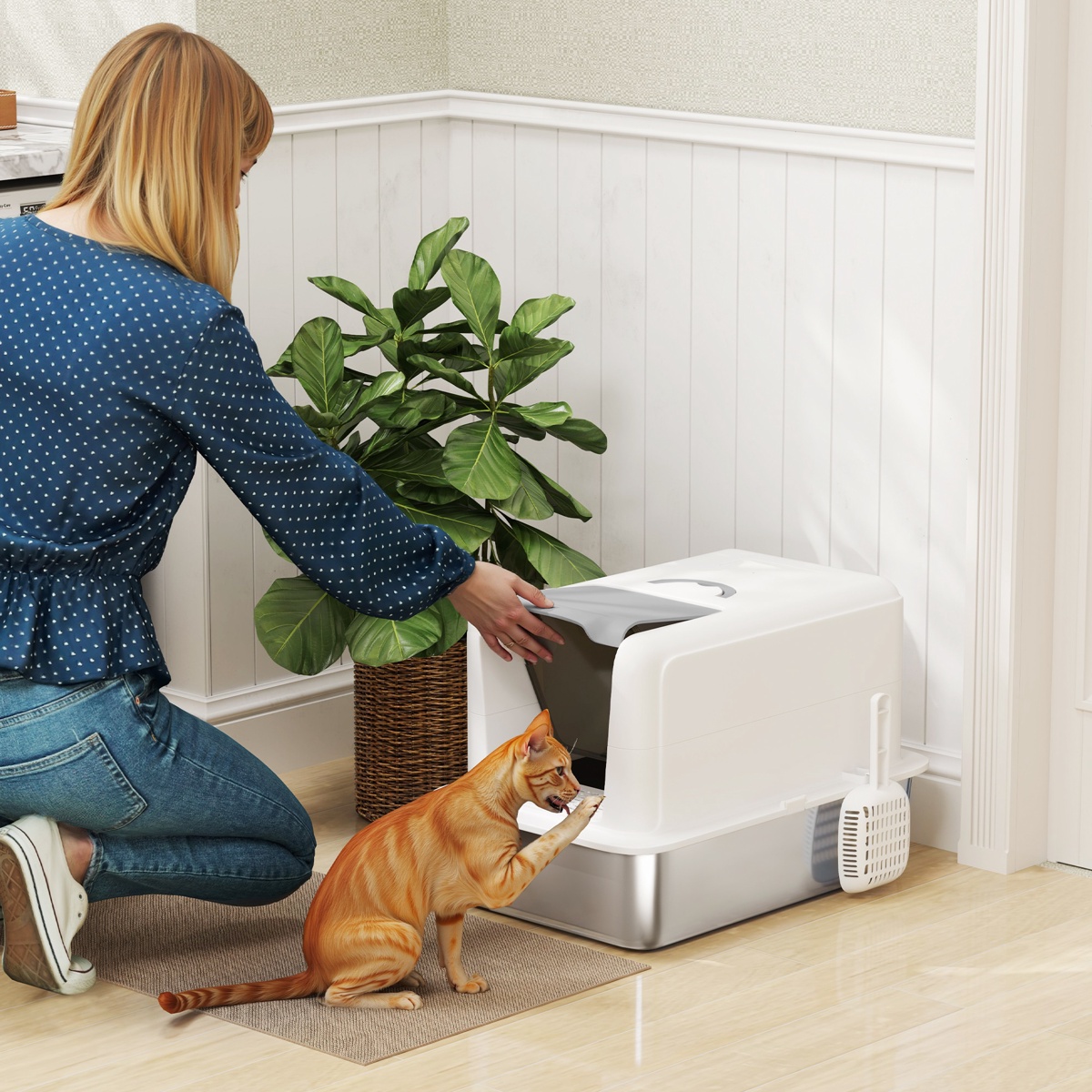

Photos from current listings. Actual item, color, and included accessories may vary.
Small Litter Box Buying Guide
A small litter box is a space-constrained waste station sized for tight bathrooms, apartments, or single-cat households, where the core trade-off is footprint versus usable interior volume and odor control. Durable options use stainless steel or thick high-density plastic with a removable hood and sealed filter, while compromises are thin fabric enclosures or undersized pans that force frequent full changes. The decision rule: pick a rigid, scoop-friendly pan whose interior length is at least 1.5× your cat's nose-to-tail-base length, and skip any fabric or soft-sided box that traps ammonia and cannot be scrubbed.


At a glance
- Category
- Pet Food, Treats & Litter
- Data updated
- Nov 18, 2026
Current offers
Highlights
- Stainless steel pans resist scratching and odor absorption indefinitely; plastic pans degrade and harbor bacteria once claw marks breach the surface.
- Removable hoods convert an enclosed box to an open pan in seconds, which matters for cats that refuse covered boxes or for senior cats with mobility limits.
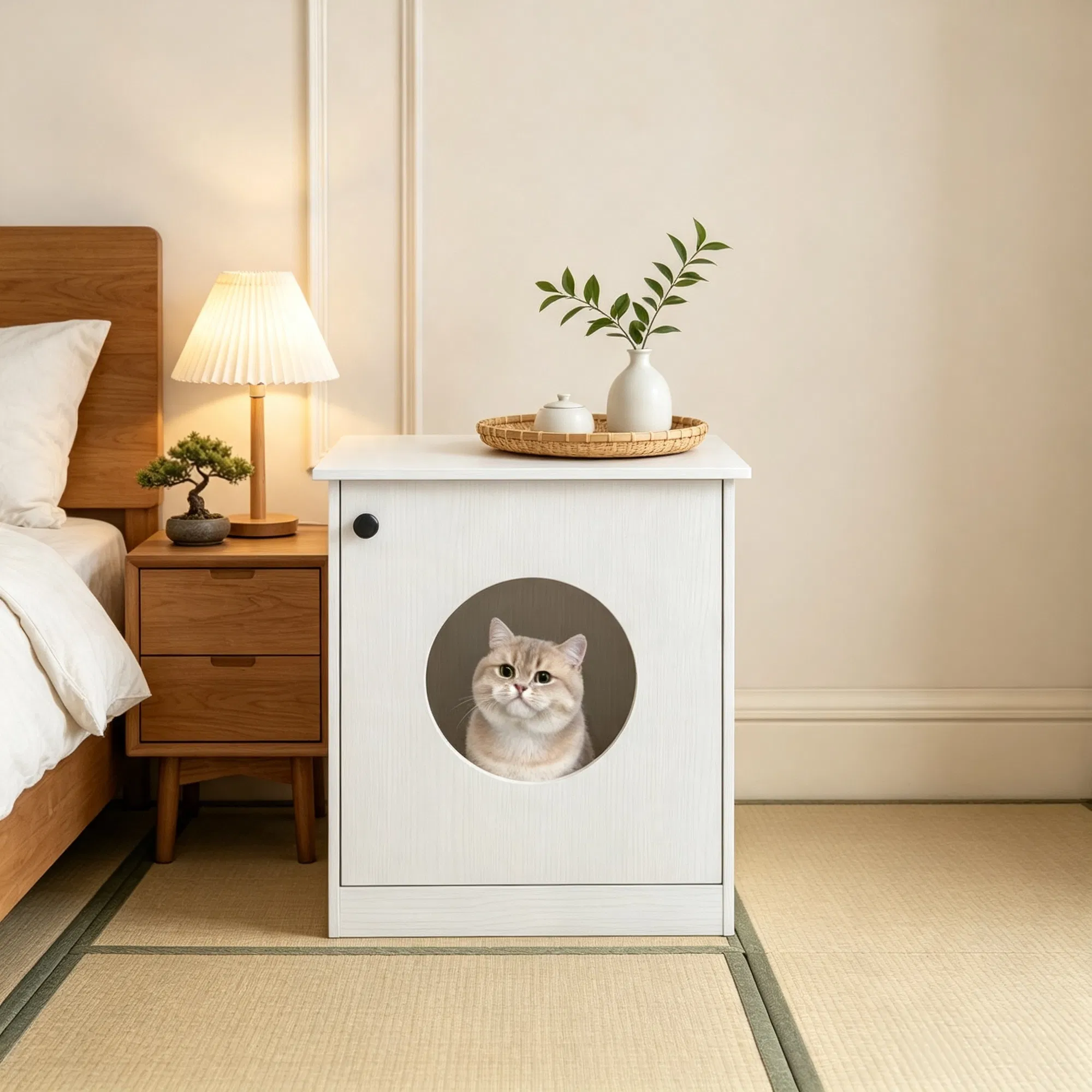
- Enclosures add furniture-style concealment but reduce interior clearance, so measure the internal pan dimensions, not the exterior cabinet footprint.
- High-sided or hooded small boxes need 2–3 inches of clearance above the cat's head for turn-around; low-profile open pans suit kittens and arthritic cats.
Best use cases
- Best fit: a single cat in a small apartment bathroom — choose a stainless steel open pan with a clip-on low hood and carbon filter to control odor without eating floor space.
- Best fit: a living-area placement where the box must disappear — choose a compact enclosure with a front-entry door and internal pan at least 18 inches long, and skip fabric-covered pop-up enclosures.
- Wrong fit: multi-cat households or cats over 15 lb — a small box forces out-of-box elimination; step up to a full-size pan (interior length 24 inches or more) instead.
- Wrong fit: kittens under 4 months or senior cats with arthritis — skip high-entry enclosed models and use a low-sided open pan with a 3-inch lip.
Buying tips
- Measure your cat from nose to tail base; the pan's interior length should be at least 1.5× that figure, so a 20-inch cat needs roughly a 30-inch interior — many 'small' boxes fail this.
- Prefer 304-grade stainless steel or polypropylene at least 2 mm thick; thin ABS plastic under 1.5 mm flexes, cracks at the rim, and absorbs urine odor permanently.
- For hooded models, confirm the filter slot takes standard carbon pads and that the lid latches — unlatched hoods pop off when a cat digs.
- Enclosure cabinets need a interior height of at least 18 inches and a front opening at least 10 inches wide; anything tighter traps a cat mid-turn and causes avoidance.
Specs
| Pan Material | 304 stainless steel vs polypropylene |
|---|---|
| Interior Length | 18 in small / 24 in+ full-size |
| Hood Type | Removable clip-on / open pan |
| Enclosure Clearance | 18 in height, 10 in entry width |
Related searches
What to check before buying
- Floor space: measure the exact footprint you can spare and add 3 inches on the entry side for the cat to stand; a 'small' box still needs swing room.
- Litter depth: confirm the pan holds at least 2–3 inches of clumping litter without reaching the rim; shallow pans leak urine over the edge.
- Ventilation: place hooded or enclosed boxes away from walls on at least two sides so ammonia does not concentrate in a dead corner.
- Companion parts: budget for a scoop that fits the pan corners, replacement carbon filters every 2–4 weeks, and a litter mat sized to the box footprint.
FAQ
Data sources: eBay / Amazon listings and product attribute feeds Data updated Nov 18, 2026.
Some links on this page are affiliate links. If you buy after clicking one, we may earn a commission at no extra cost to you. This does not change which products appear here or their order. Affiliate disclosure.