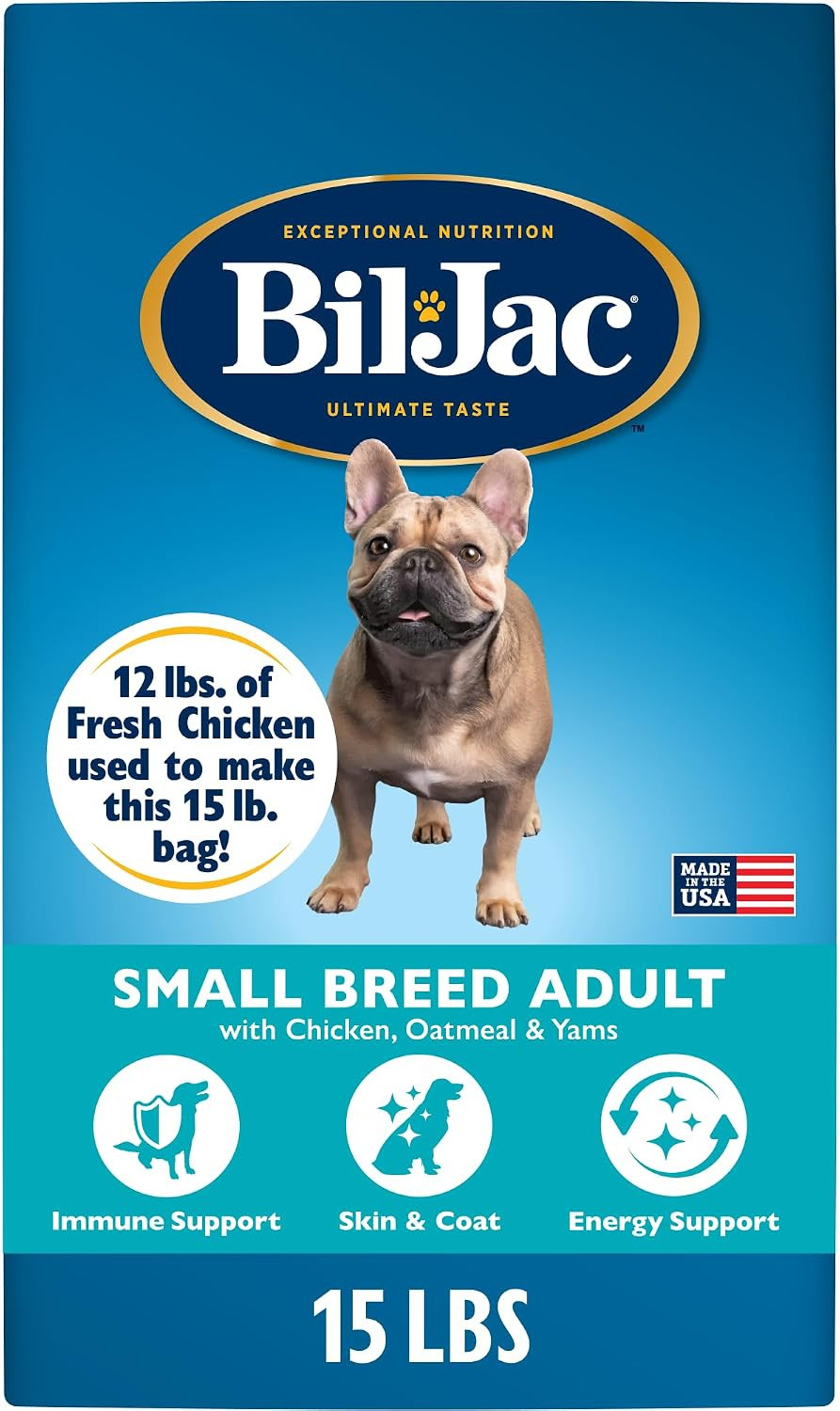

Photos from current listings. Actual item, color, and included accessories may vary.
Small Breed Dog Food Buying Guide
Small breed dog food is kibble formulated with smaller kibble size, higher calorie density, and often added joint or dental support for dogs under about 20-25 lb. The core trade-off is between protein quality and calorie concentration: small breeds burn more calories per pound, but overfeeding dense kibble causes rapid weight gain. The decision rule is simple: buy a formula with a named meat first, guaranteed AAFCO 'complete and balanced' language for your dog's life stage, and a kibble size your dog can pick up comfortably.


At a glance
- Category
- Pet Food, Treats & Litter
- Data updated
- Nov 18, 2026
Current offers
Highlights
- Small breed formulas typically deliver 400-450 kcal/cup versus 300-350 kcal/cup for standard adult kibble, so serving scoops must be 20-30% smaller than label guidance for larger dogs.
- Kibble diameter for small breeds generally runs 8-10 mm versus 12-15 mm for large-breed formulas; dogs under 10 lb benefit most from the smaller size to reduce gulping and choking risk.
- AAFCO statements like 'complete and balanced for adult maintenance' or 'all life stages' are the legal threshold; 'all life stages' is the only safe choice for puppies under one year.
- Named meat meal (e.g., chicken meal, salmon meal) in the first three ingredients signals a concentrated protein source; fresh meat alone is mostly water and can rank first while contributing little protein.
Best use cases
- Best fit: an adult small breed dog (5-20 lb) with normal activity gets a 400-450 kcal/cup adult formula with chicken or fish meal first and a 9-10 mm kibble; skip large-breed or high-fiber weight-control formulas unless the dog is clinically overweight.
- Wrong fit: a small breed puppy under 12 months should never get 'adult maintenance' food—pick an 'all life stages' or puppy-labeled small breed formula to protect growth and bone development.
- Best fit: a senior small breed (7+ years) with dental issues benefits from smaller kibble plus added glucosamine, but skip 'senior' formulas if the dog has kidney disease—those require veterinary renal diets, not grocery senior kibble.
- Wrong fit: a multi-dog household with both a Great Dane and a Chihuahua should not feed one 'small breed' bag to both; the large dog will under-chew small kibble and the small dog will overeat calorie-dense food.
Buying tips
- Check the guaranteed analysis for protein at 22-28% and fat at 12-18% for active small breeds; below 22% protein is a maintenance-tier formula, not a performance one.
- Match kibble size to jaw width: measure your dog's muzzle—under 10 lb dogs need 8-9 mm kibble, 10-20 lb dogs can handle 10-12 mm; a 15 mm large-breed kibble is a choking hazard for toy breeds.
- Choose a bag size your dog finishes in 4-6 weeks: a 15 lb bag feeds one 10 lb dog for roughly 5-6 weeks at 1/2 cup per day, so larger bags risk stale fat and rancidity after opening.
- Look for a specific 'complete and balanced' AAFCO statement on the package; treats, toppers, and 'mixers' are not nutritionally complete and cannot replace kibble as the sole diet.
Specs
| Kibble Size | 8-10 mm (small breed) vs 12-15 mm |
|---|---|
| Calorie Density | 400-450 kcal/cup vs 300-350 |
| Protein / Fat | 22-28% protein / 12-18% fat |
| Life Stage | Adult maintenance / All life stages / Puppy |
Related searches
What to check before buying
- Weigh your dog and confirm it falls in the small-breed range (typically 5-25 lb); if it is under 5 lb, choose a toy-breed formula with even smaller kibble or a wet food.
- Measure your dog's current daily intake in cups and compare to the new formula's kcal/cup—divide current calories by new kcal/cup to get the correct starting scoop.
- Check whether your dog is a puppy, adult, or senior and confirm the AAFCO life-stage statement matches; 'all life stages' is the only label safe for growing puppies.
- Verify the bag lists a named meat meal in the first three ingredients and a guaranteed analysis with protein and fat percentages, not just marketing claims on the front panel.
FAQ
Data sources: eBay / Amazon listings and product attribute feeds Data updated Nov 18, 2026.
Some links on this page are affiliate links. If you buy after clicking one, we may earn a commission at no extra cost to you. This does not change which products appear here or their order. Affiliate disclosure.