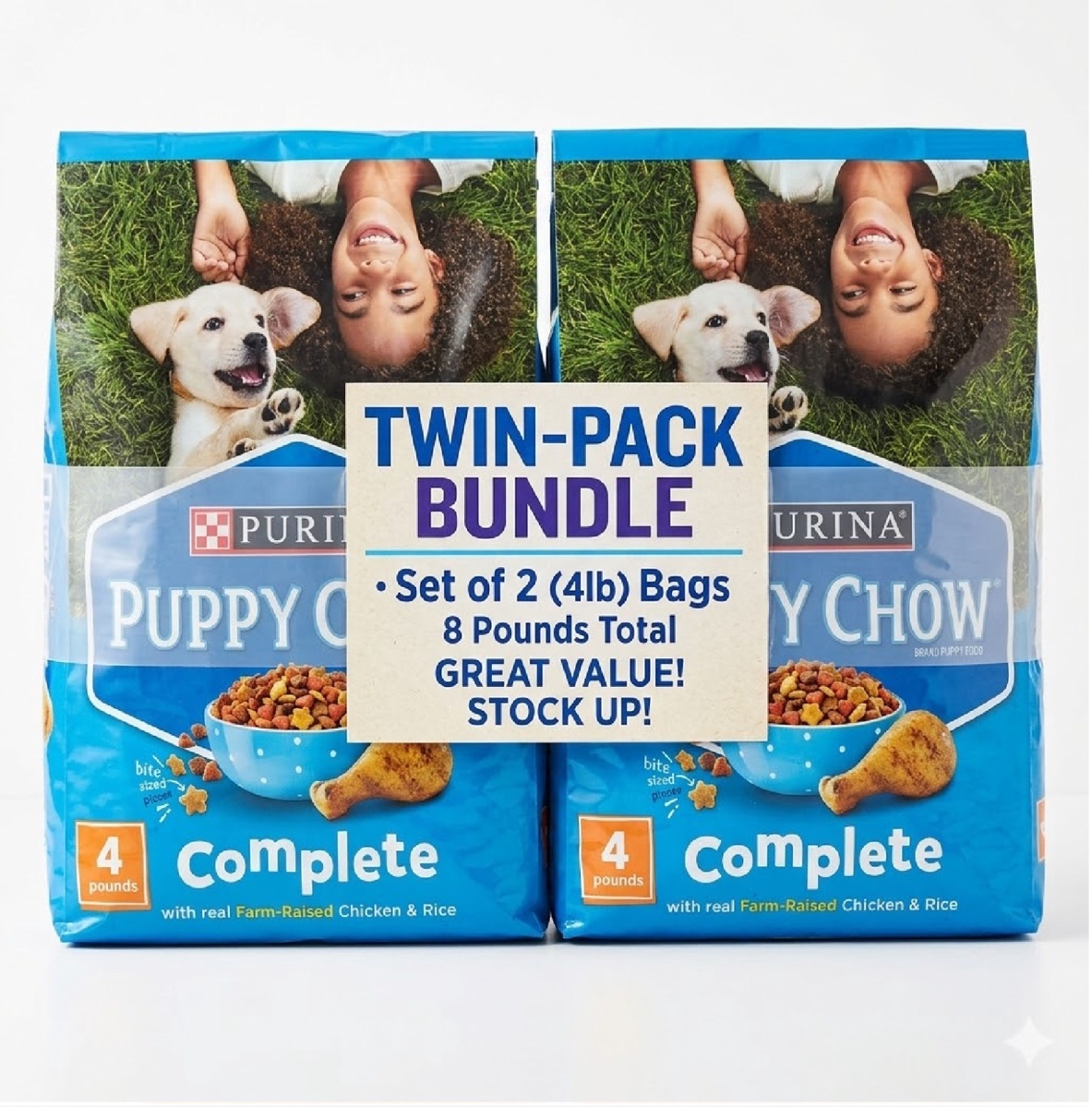

Photos from current listings. Actual item, color, and included accessories may vary.
Puppy Food Buying Guide
Puppy food is a complete-and-balanced growth diet formulated to meet AAFCO nutrient profiles for gestation/lactation or growth, with the main trade-off being protein/fat density and kibble size versus large-breed growth-rate control. The decisive rule: match the formula to adult-size category (large-breed puppies need controlled calcium and calories for slow, joint-safe growth) and choose a named meat meal first ingredient over generic corn/wheat fillers.


At a glance
- Category
- Pet Food, Treats & Litter
- Data updated
- Nov 18, 2026
Current offers
Highlights
- Large-breed puppy formulas cap calcium at roughly 1.2% and calories near 3,500 kcal/kg to slow growth and reduce hip dysplasia risk; standard puppy formulas run higher calcium and fat.
- AAFCO statement must read "complete and balanced for growth" or "for all life stages" — treats and adult maintenance diets are not substitutes.
- Named meat meal (chicken meal, salmon meal) delivers 60-70% protein by weight versus whole meat at 70% water, so meal-first formulas are more protein-dense per cup.
- Kibble diameter under 8-10 mm suits toy/small puppies; large-breed puppies do fine on 12-15 mm kibble but benefit from formulas with glucosamine and controlled fat (12-16%).
Best use cases
- Large-breed puppy (adult weight over 50 lb): pick a large-breed growth formula with 1.0-1.2% calcium and 12-16% fat; skip standard puppy food that accelerates growth.
- Small/toy puppy (adult weight under 20 lb): choose small-kibble puppy formula at 28-32% protein and 15-20% fat for energy density; skip large-breed formulas that underfeed calories.
- Multi-dog household with adult dogs: feed a puppy-specific diet to the puppy and adult maintenance to others, or choose an all-life-stages formula only if protein is 25%+ and calcium is verified.
- Budget or picky eater: a complete dry puppy food with named meat meal first is sufficient; skip grain-free unless a diagnosed allergy exists, as grain-inclusive diets carry lower DCM risk.
Buying tips
- Calculate daily calories using the label's kcal/kg: a 10 lb puppy at 8 weeks needs roughly 2x adult resting energy, so a 3,500 kcal/kg food at 1 cup/day suits most medium puppies.
- Choose a formula whose first ingredient is a named animal meal (chicken meal, turkey meal) — whole chicken or corn as first ingredient means lower protein density after water removal.
- For large breeds, confirm calcium 1.0-1.2% and phosphorus 0.8-1.0% on the guaranteed analysis; anything above 1.5% calcium is an adult or all-life-stages formula, not large-breed puppy.
- Match bag size to consumption: a 4 lb bag feeds a small puppy about 2 weeks; buy 15-30 lb bags only if the puppy will finish within 6 weeks of opening to avoid rancidity.
Specs
| Life Stage | Growth / All Life Stages (AAFCO) |
|---|---|
| Protein / Fat | 28-32% protein / 12-20% fat |
| Calcium (Large Breed) | 1.0-1.2% max for large breeds |
| Kibble Size | 8-10 mm small / 12-15 mm large |
Related searches
What to check before buying
- Weigh the puppy and estimate adult size using breed or parents — this determines large-breed versus standard puppy formula selection.
- Measure kibble size against your puppy's mouth: under 10 mm for toy breeds, 12-15 mm acceptable for large-breed puppies over 12 weeks.
- Confirm storage: opened dry food stays fresh 4-6 weeks in an airtight container; buy bag sizes the puppy finishes in that window.
- Check the AAFCO nutritional adequacy statement on the bag for "growth" or "all life stages" — puppy treats and toppers do not replace it.
FAQ
Data sources: eBay / Amazon listings and product attribute feeds Data updated Nov 18, 2026.
Some links on this page are affiliate links. If you buy after clicking one, we may earn a commission at no extra cost to you. This does not change which products appear here or their order. Affiliate disclosure.