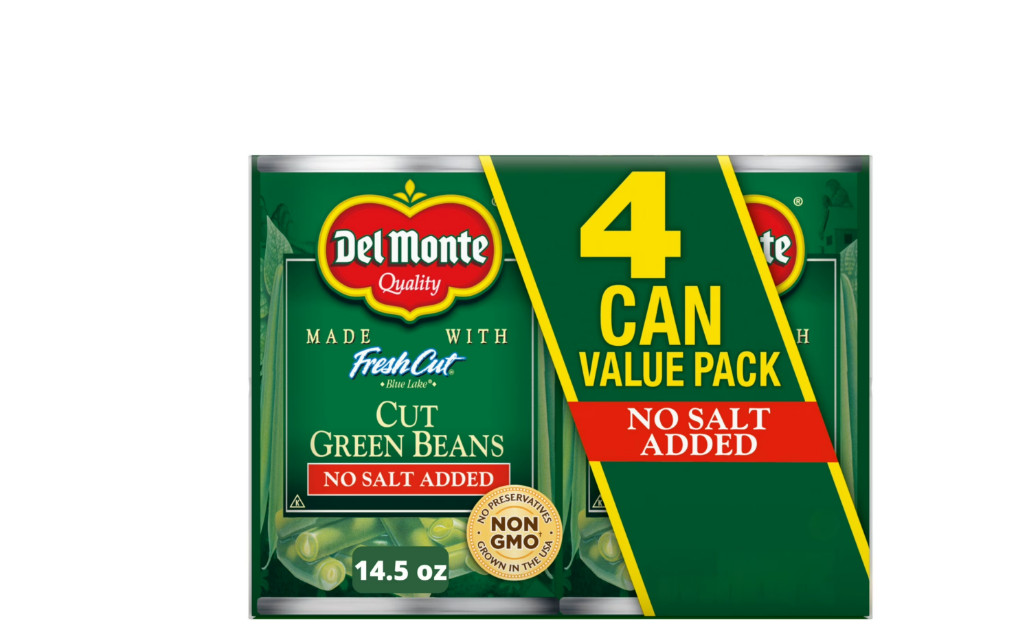

Photos from current listings. Actual item, color, and included accessories may vary.
Del Monte Green Bean Buying Guide
Del Monte Green Bean is a canned vegetable line built on Blue Lake-style whole, cut, and French-style beans packed in water or salt-free brine. The key trade-off is convenience (shelf-stable, pre-cooked, no prep) versus texture and sodium control; whole and cut beans hold shape best, while sliced or French-style soften faster. The decision rule: choose 'No Salt Added' or 'Low Sodium' cans only if the label states Blue Lake variety and a firm-pack grade, and skip generic 'cut green beans' with added salt and calcium chloride if you need crisp texture.


At a glance
- Category
- Ready Meals, Canned Food & Baking
- Data updated
- Nov 18, 2026
Current offers
Highlights
- Blue Lake is a pole bean cultivar prized for straight, stringless pods and firm texture after canning; Del Monte labels it explicitly on select cans.
- Cut and whole beans are packed in water or brine with salt; 'No Salt Added' versions omit sodium chloride but may still contain naturally occurring sodium.
- Canning is a retort process (pressure-cooked sealed can), so all canned beans are fully cooked and safe to eat cold; texture depends on pack style and calcium chloride use.
- French-style (sliced lengthwise) and diced beans soften most; whole and 'cut' (1-inch pieces) retain the firmest bite and are best for salads and reheating.
Best use cases
- Best for green bean casserole or quick stovetop side: pick cut or whole Blue Lake beans in water; skip French-style if you want visible bean shape.
- Best for low-sodium diets: choose 'No Salt Added' 14.5 oz cans; skip standard salted cans and rinse regular canned beans to cut surface sodium.
- Best for cold salads or marinated dishes: whole or cut Blue Lake beans hold texture; skip French-style and diced, which turn mushy when tossed.
- Best for soups and stews: French-style or cut beans integrate well; skip whole beans if you want them to break down into the broth.
Buying tips
- Look for 'Blue Lake' on the label—this cultivar is stringless and firm; generic 'green beans' may be a softer, stringier variety.
- Check the sodium line: standard cans have added salt (often 300-400 mg per serving); 'No Salt Added' cans list only naturally occurring sodium.
- Prefer cans without calcium chloride if you want softer beans; with calcium chloride (a firming agent) beans stay crisper but can taste slightly metallic.
- 14.5 oz is the standard can size; two cans yield about 3 cups drained, enough for a standard 9x13 green bean casserole.
Specs
| Bean Variety | Blue Lake vs generic green bean |
|---|---|
| Pack Style | Whole / Cut / French / Diced |
| Sodium Tier | Regular vs No Salt Added |
| Can Size | 14.5 oz standard / 28 oz family |
Related searches
What to check before buying
- Measure your recipe: a 14.5 oz can drains to about 1.5 cups; most casseroles call for 2 cans (3 cups drained).
- Check sodium target: if you need under 140 mg per serving, buy 'No Salt Added' and do not add salt until tasting.
- Confirm pack style on the label: 'Cut' = 1-inch pieces, 'Whole' = full pods, 'French Style' = lengthwise sliced, 'Diced' = small cubes.
- Storage: canned beans keep 2-5 years past the date code in a cool, dry place; discard any can that is bulging, leaking, or deeply dented on seams.
FAQ
Data sources: eBay / Amazon listings and product attribute feeds Data updated Nov 18, 2026.
Some links on this page are affiliate links. If you buy after clicking one, we may earn a commission at no extra cost to you. This does not change which products appear here or their order. Affiliate disclosure.