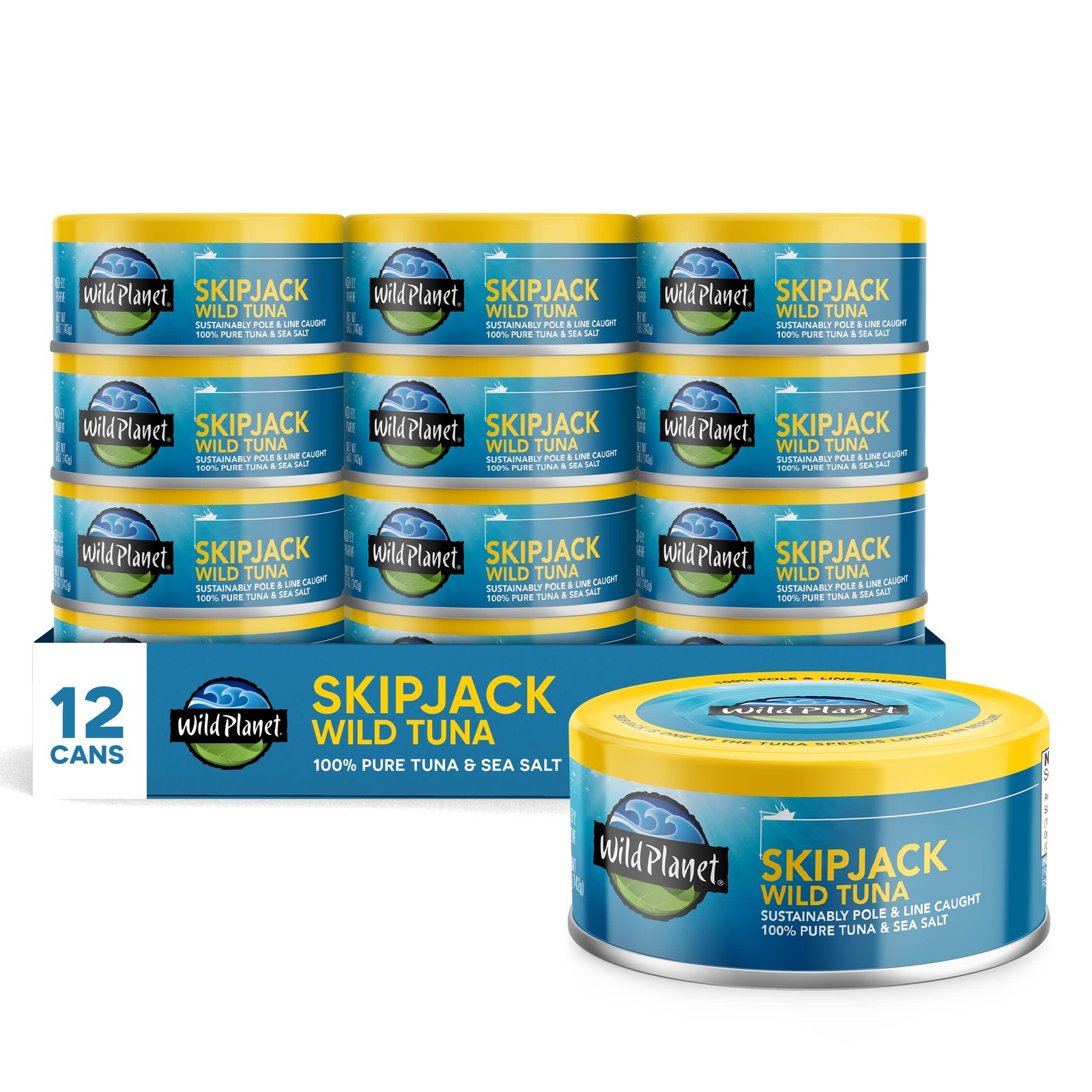

Photos from current listings. Actual item, color, and included accessories may vary.
Canned Tuna Buying Guide
Canned tuna is shelf-stable cooked tuna packed in water, oil, or broth, with the primary trade-off being species (skipjack, yellowfin, albacore) and packing liquid versus texture, flavor, and mercury exposure. The decision rule: choose skipjack or tongol for everyday value and low mercury, yellowfin or albacore for firmer steaks and richer flavor, and always match the packing liquid to your recipe's fat and salt needs.


At a glance
- Category
- Ready Meals, Canned Food & Baking
- Data updated
- Nov 18, 2026
Current offers
Highlights
- Species tiers: skipjack (light, flaky, lowest mercury), tongol (small, delicate), yellowfin (firm, mild), albacore (white, dense, higher mercury).
- Packing liquid determines use: water for low-fat salads, olive oil for straight eating, vegetable broth for neutral moisture, and oil-packed holds shape best.
- Can seams and linings matter: BPA-free linings and double-seamed cans prevent dent leakage; pop-top lids trade durability for convenience.
- Sustainability labels: pole-and-line or FAD-free troll-caught certifications indicate lower bycatch than longline or purse-seine methods.
Best use cases
- Best for budget meal prep and daily sandwiches: pick 5 oz skipjack in water, 12-pack, chunk light — skip albacore if mercury intake is a concern.
- Best for charcuterie or tuna steak salads: choose yellowfin or albacore solid white in olive oil; skip water-packed chunk for texture-sensitive dishes.
- Best for pantry emergency stock: select 5 oz cans with double-seam non-pop-top lids and at least 2 years to best-by; skip dented or pull-tab-only cases for long storage.
- Wrong fit: buying 12-packs of oil-packed tuna for low-calorie diets — oil adds significant fat and calories; choose spring water instead.
Buying tips
- Mercury rule: skipjack and tongol test lowest (under 0.15 ppm), albacore higher (around 0.35 ppm) — limit albacore to 2-3 servings weekly for sensitive groups.
- Sizing math: a 5 oz can yields about 3.5-4 oz drained; a standard 12-pack gives roughly 42-48 oz drained — about 8-10 sandwich servings.
- Packing liquid: water-packed drains to dry flakes for salads; olive-oil-packed retains fat and moisture for pasta or direct eating; broth-packed sits between.
- Label check: 'solid white' means albacore steaks, 'chunk light' means skipjack/yellowfin flakes; 'pole & line' or 'FAD-free' indicates lower bycatch.
Specs
| Tuna Species | Skipjack / Yellowfin / Albacore / Tongol |
|---|---|
| Packing Liquid | Water / Olive oil / Broth / Oil blend |
| Can Size | 5 oz standard / 2.6-3 oz mini / 12 oz family |
| Cut Style | Chunk light / Solid white / Flaked / Steaks |
Related searches
What to check before buying
- Pantry space: a 12-pack of 5 oz cans stacks to roughly 7.5 x 5 x 4 inches — confirm shelf height before buying bulk cases.
- Can style: pop-top lids save a can opener but are more prone to accidental opening in bags; standard seamed lids are sturdier for long storage.
- Dietary sodium: water-packed unsalted brands range 40-70 mg per serving; broth- or salt-added cans reach 200-300 mg — match to your sodium limits.
- Allergen and additive check: some cans include soy or vegetable broth; verify the ingredient list avoids soy if you have allergies.
FAQ
Data sources: eBay / Amazon listings and product attribute feeds Data updated Nov 18, 2026.
Some links on this page are affiliate links. If you buy after clicking one, we may earn a commission at no extra cost to you. This does not change which products appear here or their order. Affiliate disclosure.