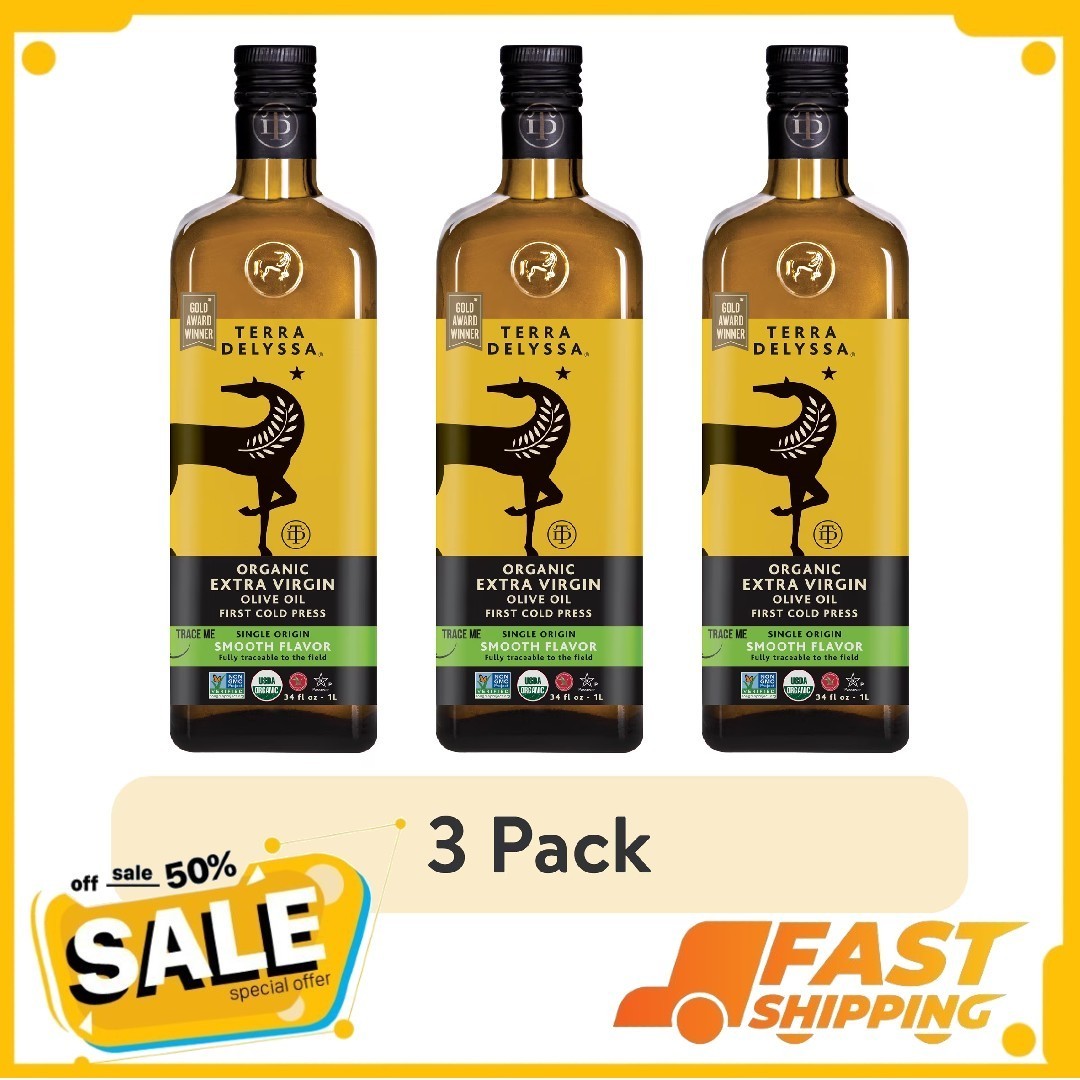

Photos from current listings. Actual item, color, and included accessories may vary.
Terra Delyssa Olive Oil Buying Guide
Terra Delyssa olive oil denotes a Tunisian brand sold in tiers: organic extra virgin, conventional extra virgin, and refined/pomace blends. The decisive trade-off is freshness and polyphenol content versus price, governed by harvest date and 'extra virgin' certification rather than bottle size. Buy only bottles stamped with a recent harvest year and a non-opaque container; skip any bottle without a harvest date or labeled 'pure' or 'light'.


At a glance
- Category
- Rice, Flour, Oil & Condiments
- Data updated
- Nov 18, 2026
Current offers
Highlights
- Terra Delyssa Organic Extra Virgin is cold-extracted from Tunisian olives and carries USDA Organic certification; the standard Extra Virgin is the same first-press grade without organic certification.
- Extra virgin grade requires free acidity ≤0.8% and peroxide value ≤20 mEq O2/kg; 'Pure' or 'Light' Terra Delyssa is refined oil with lower polyphenols and neutral flavor.
- Dark glass or tin packaging blocks UV light that degrades chlorophyll and polyphenols; clear glass accelerates rancidity.
- Harvest date, not best-by date, governs freshness: oils bottled within 12–18 months of harvest retain peak peppery polyphenol character.
Best use cases
- Best fit: buy Terra Delyssa Organic Extra Virgin in dark glass or tin for raw finishing, salad dressings, and dipping where peppery polyphenols matter.
- Best fit: choose conventional Terra Delyssa Extra Virgin for everyday sautéing and roasting when organic certification is not required.
- Wrong fit: skip 'Pure' or 'Light' Terra Delyssa for finishing or health-focused use—refined oil loses most polyphenols and aroma.
- Wrong fit: avoid clear-glass or undated bottles for long-term pantry storage; oxidation degrades quality within months of opening.
Buying tips
- Select bottles labeled 'Extra Virgin' (acidity ≤0.8%) and stamped with a harvest year within the last 18 months; avoid 'Pure', 'Light', or 'Pomace'.
- Prefer dark glass or tin over clear glass; 34 fl. oz. (1 L) is the standard size, so buy multiples only if you consume within 6–8 months of opening.
- Organic certification (USDA/EC) adds cost; buy it only if you specifically require certified organic production, otherwise conventional extra virgin delivers similar cooking performance.
- Store away from heat and light; a 1 L bottle oxidizes measurably within 3–4 months after opening, so match bottle size to your monthly usage.
Specs
| Grade | Extra Virgin vs Pure/Light (refined) |
|---|---|
| Acidity | ≤0.8% free acidity (EVOO) |
| Certification | USDA Organic vs Conventional |
| Packaging | Dark glass / tin vs clear glass |
Related searches
What to check before buying
- Measure pantry space and confirm a 34 fl. oz. (1 L) bottle or 3-pack fits upright without crowding; oil should be stored below 21°C (70°F).
- Check the label for 'Extra Virgin', harvest year, and USDA Organic seal if organic is required; reject bottles without a harvest date.
- Confirm bottle material is dark glass or tin—not clear PET or clear glass—for UV protection.
- Verify you have a cool, dark cabinet away from the stove; heat and light accelerate rancidity even in extra virgin oil.
FAQ
Data sources: eBay / Amazon listings and product attribute feeds Data updated Nov 18, 2026.
Some links on this page are affiliate links. If you buy after clicking one, we may earn a commission at no extra cost to you. This does not change which products appear here or their order. Affiliate disclosure.