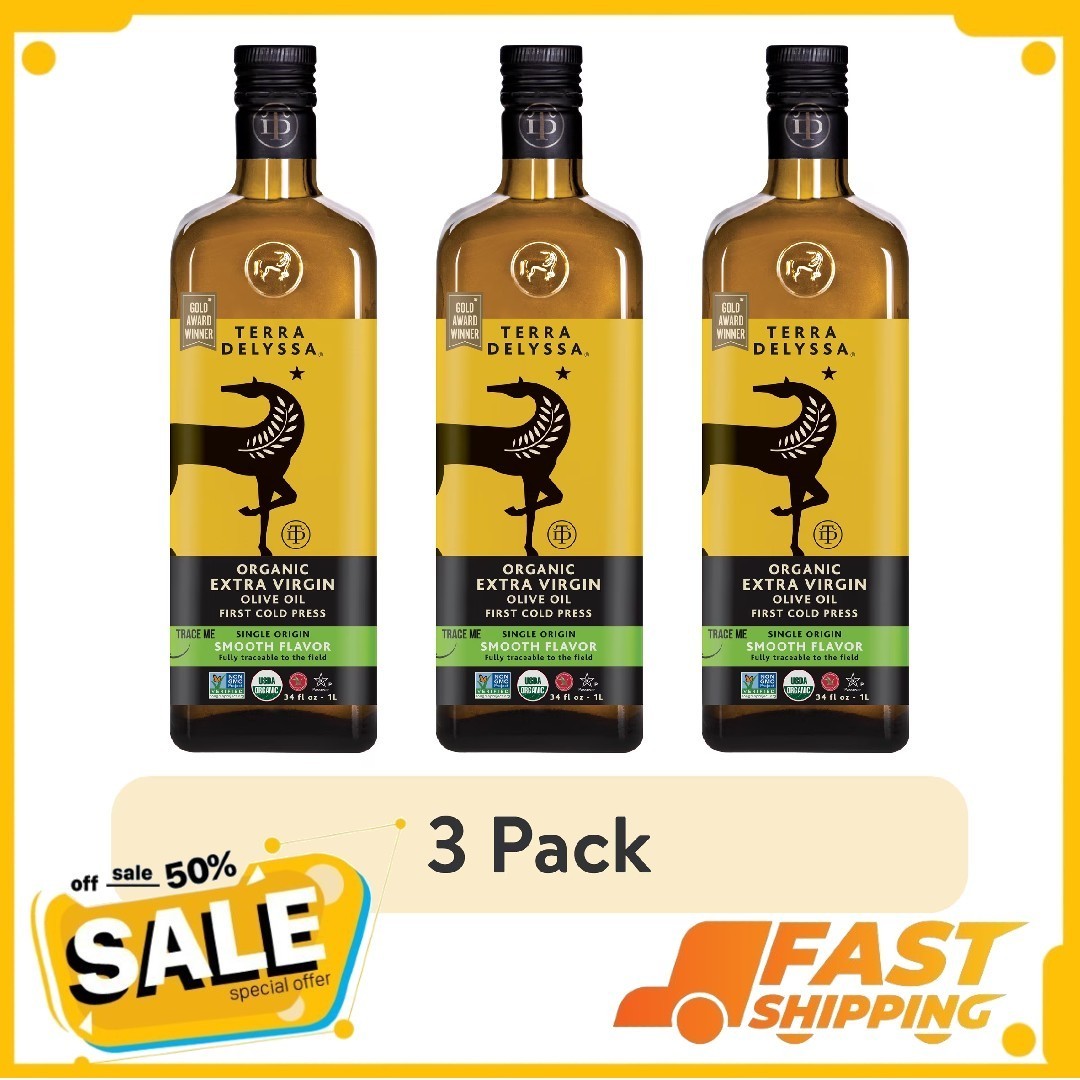

Photos from current listings. Actual item, color, and included accessories may vary.
Organic Olive Oil Buying Guide
Organic olive oil is a regulated food category where the 'organic' claim is a certification standard (USDA NOP, EU Organic) separate from the quality grade that actually determines flavor and heat tolerance. The core trade-off is between certified-organic authenticity and the freshness/grade reality behind the label: 'extra virgin' must be cold-extracted with free acidity ≤0.8%, but organic certification does not guarantee grade quality or harvest date. Buy by harvest date and grade first, then organic certification second — an organic 'pure' or 'light' oil is a refined product, not the same tier as organic extra virgin.


At a glance
- Category
- Rice, Flour, Oil & Condiments
- Data updated
- Nov 18, 2026
Current offers
Highlights
- Grade hierarchy: Extra virgin requires free acidity ≤0.8% and no refining; 'virgin' allows up to 2.0%; 'pure' or 'light' olive oil is refined and blends virgin with refined oil, so organic labeling on those tiers signals farming, not quality.
- Organic certification: USDA NOP and EU Organic require documented organic grove management and separation from conventional oil; a single certification seal on the bottle is the proof, not the word 'organic' in brand or product names.
- Freshness chemistry: Harvest date (not 'best by') predicts polyphenol and flavor; extra virgin peaks within 12–18 months of harvest, and glass bottles with dark tint or tins protect against light-driven oxidation better than clear plastic.
- Cold extraction and packaging: 'Cold extracted' or 'first cold press' means processing under ~27°C (80°F) to preserve polyphenols; opaque glass or tin packaging plus a harvest date on the label is the practical durability signal.
Best use cases
- Finishing and raw use (dressings, dips, bread): choose certified-organic extra virgin with a harvest date within the last 12 months and dark glass or tin — this is where flavor and polyphenols matter and the organic premium pays off.
- Everyday cooking and sautéing: pick any certified-organic extra virgin you enjoy, but skip organic 'light' or 'pure' only if you want polyphenols — for high-heat searing, a refined oil with a higher smoke point is the right tool, organic or not.
- Wrong fit: buying organic 'pure' or pomace oil expecting extra-virgin flavor; pomace is solvent-extracted from leftover pulp and is a utility oil, not a finishing oil, regardless of an organic seal.
Buying tips
- Look for the harvest date (not just 'best by') on the bottle: extra virgin is freshest within 12 months of harvest and declines noticeably after 18–24 months even when stored well.
- Check the certification seal (USDA NOP or EU Organic) plus the grade phrase 'extra virgin' together — one without the other means you are paying for a claim, not a verified grade.
- Prefer dark glass or tin packaging: light and heat accelerate oxidation, and clear bottles on bright shelves lose freshness faster than opaque, sealed containers.
- Read the origin and blend: single-origin (e.g., Tunisia, Spain, Italy, Greece) is traceable, while 'Mediterranean blend' bottles can vary batch to batch; certified organic single-origin is the most predictable choice.
Specs
| Grade | Extra virgin / virgin / pure / pomace |
|---|---|
| Organic Certification | USDA NOP / EU Organic seal |
| Acidity (Extra Virgin) | ≤0.8% free acidity |
| Packaging | Dark glass / tin / clear plastic |
Related searches
What to check before buying
- Confirm the bottle or tin is labeled 'extra virgin' and carries a current harvest date — a missing harvest date means you cannot judge freshness.
- Check that the organic seal matches a recognized standard (USDA NOP for US, EU Organic leaf for Europe) and not just a brand name containing 'organic'.
- Verify capacity and format for your use: 34 fl oz (1 L) bottles suit regular cooking, while smaller bottles or tins make sense if you use oil slowly and cannot finish a liter within a few months.
- Plan storage before buying in bulk: a cool, dark cupboard away from the stove preserves extra virgin; a 3-pack only saves money if you can store and finish it within the freshness window.
FAQ
Data sources: eBay / Amazon listings and product attribute feeds Data updated Nov 18, 2026.
Some links on this page are affiliate links. If you buy after clicking one, we may earn a commission at no extra cost to you. This does not change which products appear here or their order. Affiliate disclosure.