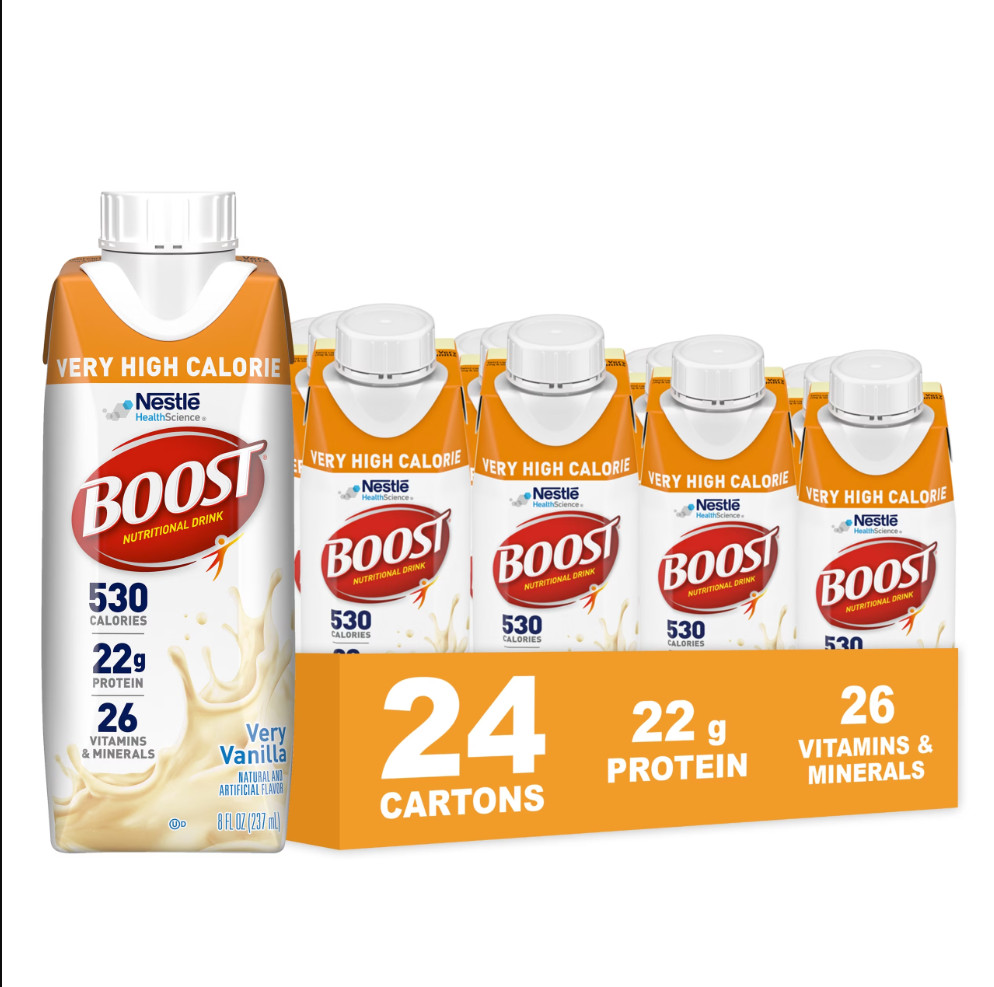

Photos from current listings. Actual item, color, and included accessories may vary.
High Calorie Drink Buying Guide
High-calorie drinks are liquid nutrition products delivering 350–530+ kcal per serving for weight gain, muscle recovery, or medical need. The key trade-off is calorie density versus protein quality and digestive tolerance: very-high-calorie (VHC) 1.5–2.0 kcal/mL formulas pack more energy per ounce but often rely on maltodextrin and added sugars, while standard 1.0–1.2 kcal/mL formulas use more protein and fiber but require larger volumes. The decision rule: choose VHC (≥1.5 kcal/mL) only when small-volume intake is required; otherwise select a 1.0–1.2 kcal/mL formula with ≥20 g protein and ≤15 g added sugar per serving for sustainable weight gain.


At a glance
- Category
- Dairy, Beverages & Breakfast
- Data updated
- Nov 18, 2026
Current offers
Highlights
- Calorie density tiers: standard 1.0–1.2 kcal/mL (250–350 kcal/8 oz) vs very-high-calorie 1.5–2.0 kcal/mL (350–530+ kcal/8 oz); VHC cuts required volume by 30–50%.
- Protein source matters: whey/casein isolates digest faster and score higher on PDCAAS (1.0) than soy or pea blends; 20–30 g protein per serving supports lean mass gain.
- Sugar and fiber balance: formulas with >20 g added sugar per serving spike insulin and risk GI distress; 3–5 g fiber per serving (or added prebiotics) improves tolerance.
- Packaging and shelf life: aseptic Tetra Pak cartons (often 24-pack cases) give 9–12 months unrefrigerated stability; ready-to-drink cans require no mixing but cost more per calorie.
Best use cases
- Best fit: post-surgery or illness recovery where appetite is low—pick a 1.5–2.0 kcal/mL VHC formula (e.g., Boost Very High Calorie) to meet 1,500+ kcal/day in 3 small servings.
- Best fit: healthy weight gain for hardgainers—choose a 1.0–1.2 kcal/mL formula with 20–30 g protein and ≤15 g added sugar, consumed as 2–3 snacks daily alongside whole foods.
- Wrong fit: daily meal replacement for weight maintenance—skip VHC formulas (excess sugar and cost) and use a balanced 1.0 kcal/mL shake with fiber and micronutrients.
- Wrong fit: lactose intolerance without checking—avoid milk-protein-based drinks unless labeled lactose-free; choose soy or pea-protein VHC alternatives instead.
Buying tips
- Calculate daily calorie gap: if you need +500 kcal/day, two 250-kcal standard servings suffice; if you need +1,000 kcal/day and can't eat more, choose two 500-kcal VHC servings.
- Check protein per 100 kcal: aim for ≥8–10 g protein per 100 kcal in weight-gain formulas to favor muscle over fat gain; VHC medical formulas often run 5–6 g/100 kcal.
- Verify serving volume: 8 oz (237 mL) is standard; VHC products may be 8 oz but deliver 350–530 kcal—confirm kcal per carton, not per 100 mL, to compare fairly.
- Prefer aseptic cartons with ≥9 months shelf life and 24-pack cases for cost efficiency; avoid canned shakes if you lack refrigeration after opening (use within 24–48 hours).
Specs
| Calorie Density | 1.0–2.0 kcal/mL (VHC ≥1.5) |
|---|---|
| Protein Per Serving | 20–30 g (≥8 g/100 kcal) |
| Packaging Format | Aseptic carton / ready-to-drink can |
| Added Sugar Limit | ≤15 g per serving preferred |
Related searches
What to check before buying
- Measure your daily intake gap: track current calorie intake for 3 days; if gap <500 kcal, standard formula; if >800 kcal and low appetite, VHC.
- Check dietary restrictions: confirm lactose-free, gluten-free, or soy-free labeling if needed; milk-protein formulas are not suitable for dairy allergy.
- Storage capacity: 24-pack cases occupy ~0.5–0.7 cu ft; ensure pantry space and note refrigeration needed after opening (most cartons hold 24–48 hours).
- Companion parts: VHC powders require a shaker bottle and scale for accurate mixing; ready-to-drink cartons need only a glass and straw.
FAQ
Data sources: eBay / Amazon listings and product attribute feeds Data updated Nov 18, 2026.
Some links on this page are affiliate links. If you buy after clicking one, we may earn a commission at no extra cost to you. This does not change which products appear here or their order. Affiliate disclosure.