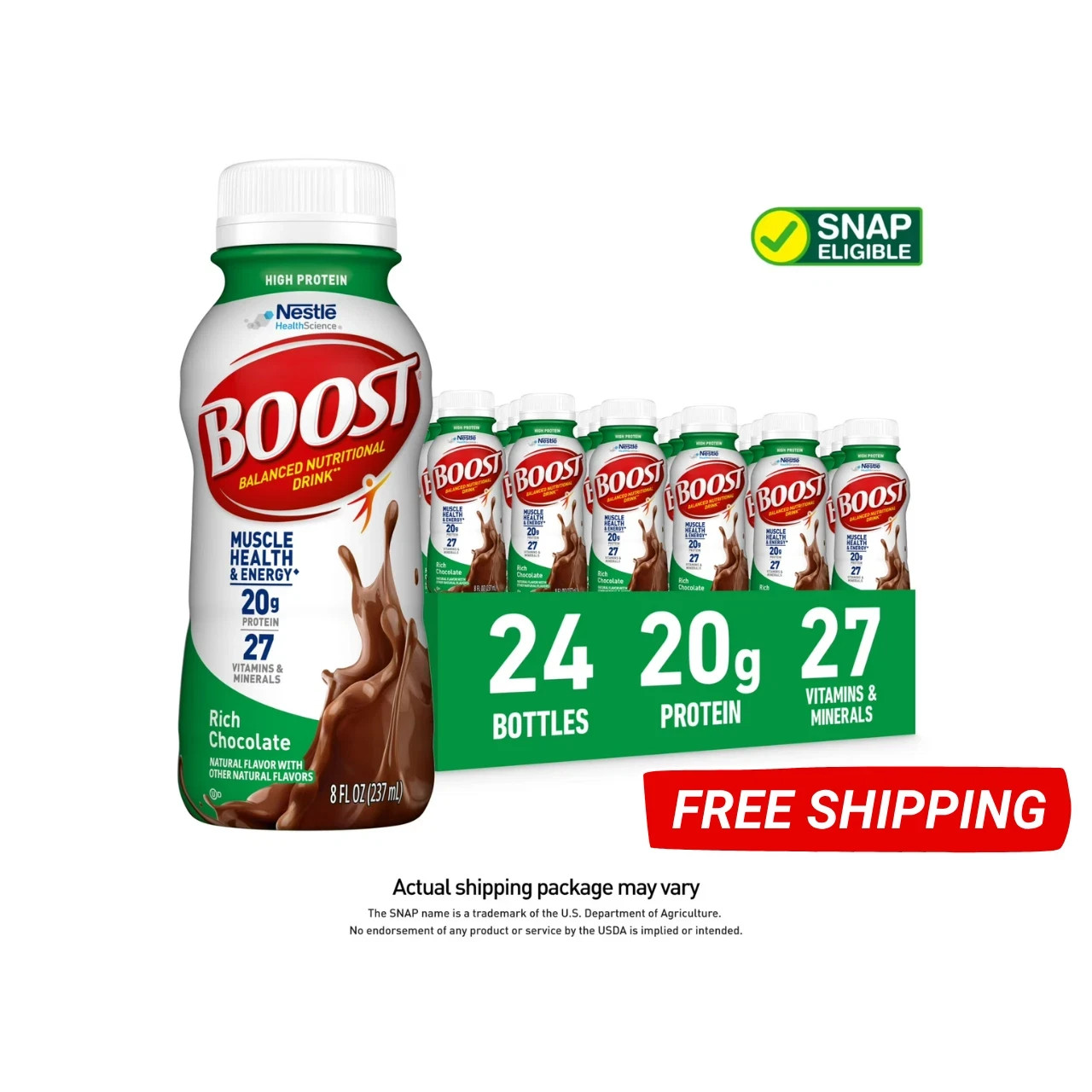

Photos from current listings. Actual item, color, and included accessories may vary.
Boost Protein Drink Buying Guide
Boost Protein Drink is a line of ready-to-drink nutritional shakes distinguished by calorie density and protein tier—ranging from standard 20g protein bottles to very-high-calorie 22g versions—where the core trade-off is between convenient protein delivery and the sugar/fat load needed to achieve higher calorie counts. Durable buying decisions hinge on matching the calorie and protein tier to your use case (meal supplement vs. post-workout vs. weight-maintenance) rather than chasing the highest number, since very-high-calorie formulas are not appropriate for general hydration or casual protein top-ups.


At a glance
- Category
- Dairy, Beverages & Breakfast
- Data updated
- Nov 18, 2026
Current offers
Highlights
- Standard Boost High Protein provides 20g protein per 8 fl oz bottle, positioned for everyday protein supplementation and meal replacement.
- Boost Very High Calorie delivers 22g protein with a substantially higher calorie density per bottle, intended for intentional weight gain or high energy-expenditure recovery.
- Protein source is primarily milk-based (milk protein concentrate/whey), making these unsuitable for dairy-free or vegan diets without lactose-free alternatives.
- Pack formats are typically 24-count cases of 8 fl oz bottles; ready-to-drink format avoids powder mixing but commits you to shelf-stable liquid storage.
Best use cases
- Best fit: post-illness or low-appetite recovery—choose the Very High Calorie 22g tier for maximum calories per bottle when small volumes must deliver high energy.
- Best fit: daily protein top-up for active adults—pick the standard High Protein 20g tier; the lower calorie load suits supplementation without excess sugar.
- Wrong fit: lactose-intolerant or dairy-free shoppers—these milk-protein formulas will cause discomfort; select a plant-based protein shake instead.
- Wrong fit: weight-loss or calorie-controlled diets—the Very High Calorie tier is calorie-dense by design and counterproductive for deficit goals.
Buying tips
- Match protein tier to goal: 20g standard for maintenance/supplementation; 22g very-high-calorie only for weight-gain or high-expenditure recovery.
- Check bottle volume: 8 fl oz is the standard single-serving size—confirm case count (commonly 24) against your consumption rate before committing to bulk.
- Verify protein source on the label: milk protein concentrate and whey mean dairy; lactose-free or plant-based needs require a different product line.
- Choose flavor based on delivery method: chocolate masks vitamin/mineral notes better; vanilla blends more neutrally into coffee or smoothies.
Specs
| Protein Tier | 20g standard / 22g very-high-cal |
|---|---|
| Bottle Volume | 8 fl oz single-serve |
| Protein Source | Milk protein / whey (dairy) |
| Case Format | 24-count shelf-stable bottles |
Related searches
What to check before buying
- Confirm your dietary restriction status (dairy/lactose) before selecting any Boost milk-based formula.
- Measure available pantry or fridge shelf space for a 24-count case of 8 fl oz bottles (roughly a full shelf section).
- Check calorie target per day: Very High Calorie bottles can exceed 350 kcal each—factor into total intake.
- Verify you have a consistent consumption window (typically within weeks of opening the case) since ready-to-drink shakes have limited post-purchase shelf life.
FAQ
Data sources: eBay / Amazon listings and product attribute feeds Data updated Nov 18, 2026.
Some links on this page are affiliate links. If you buy after clicking one, we may earn a commission at no extra cost to you. This does not change which products appear here or their order. Affiliate disclosure.