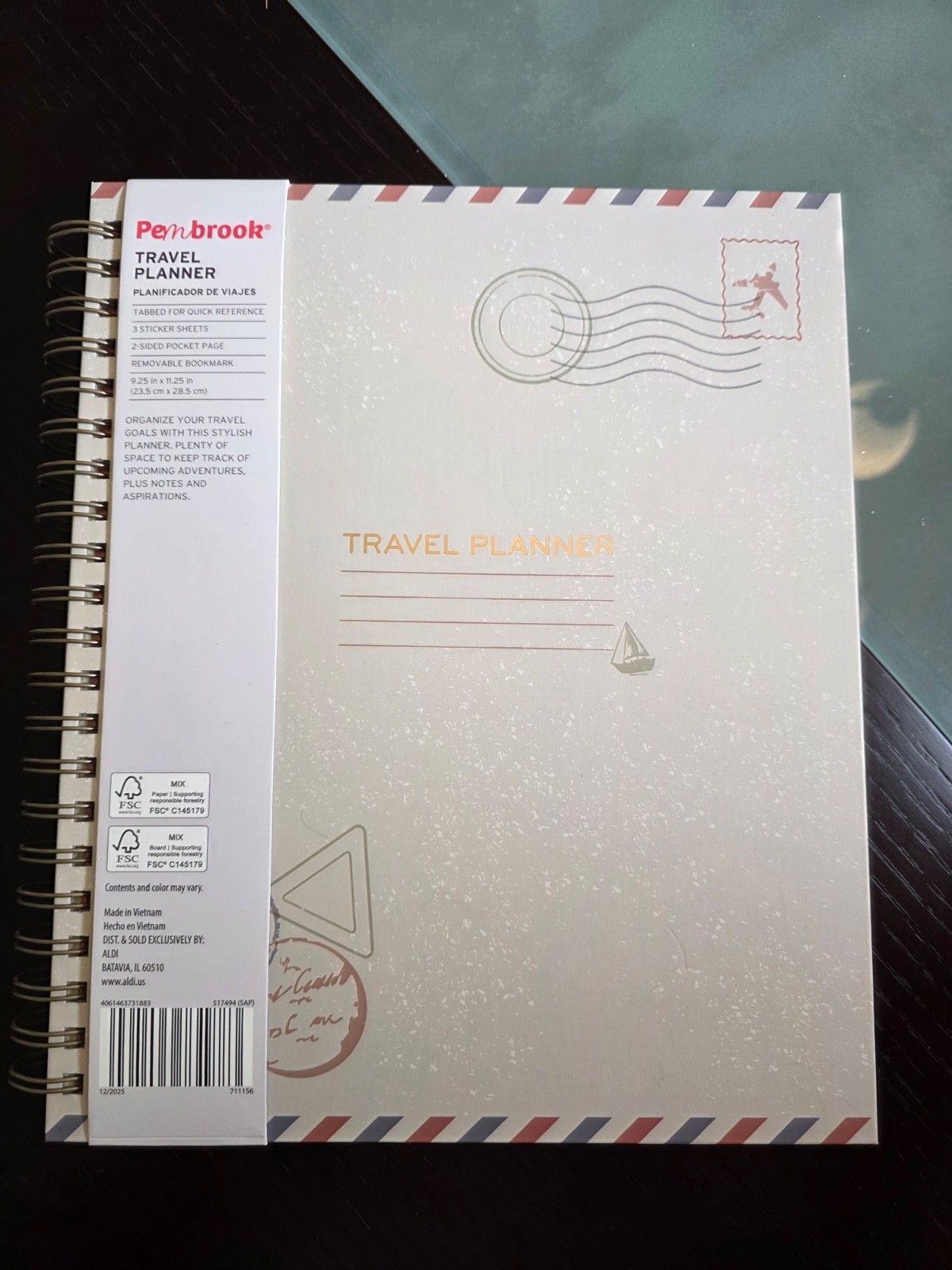

Photos from current listings. Actual item, color, and included accessories may vary.
Pembrook Travel Planner Buying Guide
The Pembrook Travel Planner is a paperboard-bound, large-format organiser designed to consolidate trip research, itineraries, and expense tracking into one physical book. The core trade-off is paperboard cover stiffness and page count versus portability: heavier board and more pages resist wear but add bulk, while thinner planners trade durability for bag-friendly size. Choose a paperboard-bound large planner if you plan one to three trips per year and write heavily; skip it if you need waterproof pages, refillable rings, or a pocket-sized format.


At a glance
- Brand
- Not synced yet
- Model
- Not synced yet
- MPN
- Not synced yet
- Category
- Stationery, School & Office Consumables
- Status
- Offers available
- Data updated
- Nov 18, 2026
Current offers
Highlights
- Paperboard cover construction provides stiffer page support than softcover planners but is not waterproof; laminated or polypropylene covers resist spills better.
- Large format typically measures roughly 8.5 x 11 in (A4-class), giving full-page itinerary spreads and pocket folders that A5 planners cannot match.
- Bound-page planners are non-refillable; ring-binder and discbound systems let you reorder or add pages, while paperboard-bound books are fixed for their service life.
- Undated layouts let you start any month without wasting pages; dated planners enforce chronological use but become obsolete after December.
Best use cases
- Best fit: one to three leisure or business trips per year with heavy handwritten notes and receipt pockets; pick the large paperboard-bound planner and pair it with a zippered pouch for loose items.
- Wrong fit: daily commuters or carry-on-only travelers who need a pocket or A5 planner; the large format adds noticeable weight and will not fit small crossbody bags.
- Best fit: multi-city itineraries needing full-page spread layouts for flights, lodging, and daily schedules; the large page size accommodates printed confirmations taped or stapled in.
- Skip if: you need to add or remove pages, carry it in rain, or reuse the same cover for years; choose a discbound or ring-bound planner with poly cover instead.
Buying tips
- Measure your bag's internal sleeve before buying: large planners run about 8.5 x 11 in, so confirm at least 9 x 12 in of flat space.
- Check page count per trip section: fewer than 10 itinerary pages forces you to combine trips or use loose inserts; 12 or more pages per trip suits multi-city travel.
- Paperboard thickness of 1.5-2 mm holds shape in a tote; below 1 mm the cover curls at corners after a few weeks of use.
- Prefer undated layouts unless your trips align with a calendar year; undated planners avoid wasted pages and can start mid-year.
Specs
| Binding Type | Paperboard-bound / fixed pages |
|---|---|
| Page Format | Large ~8.5 x 11 in (A4-class) |
| Date Layout | Undated / fill-in |
| Refillable | No / fixed book |
Alternatives to compare

Related searches
What to check before buying
- Measure your daily bag or carry-on sleeve: large planners need roughly 9 x 12 in of flat clearance to slide in without bending corners.
- Confirm your writing load: count expected trip days and pages per day; a large planner with 80+ pages covers multiple trips, while thin 40-page books fill fast.
- Decide on refillability: paperboard-bound is fixed; if you want to archive trips or add pages, choose a ring or discbound planner instead.
- Check pen compatibility: paperboard-bound planners usually use 70-100 gsm paper; fountain pens and heavy markers may bleed through thin pages, so use fine-tip or ballpoint.
FAQ
Data sources: eBay / Amazon listings and product attribute feeds Data updated Nov 18, 2026.
Some links on this page are affiliate links. If you buy after clicking one, we may earn a commission at no extra cost to you. This does not change which products appear here or their order. Affiliate disclosure.