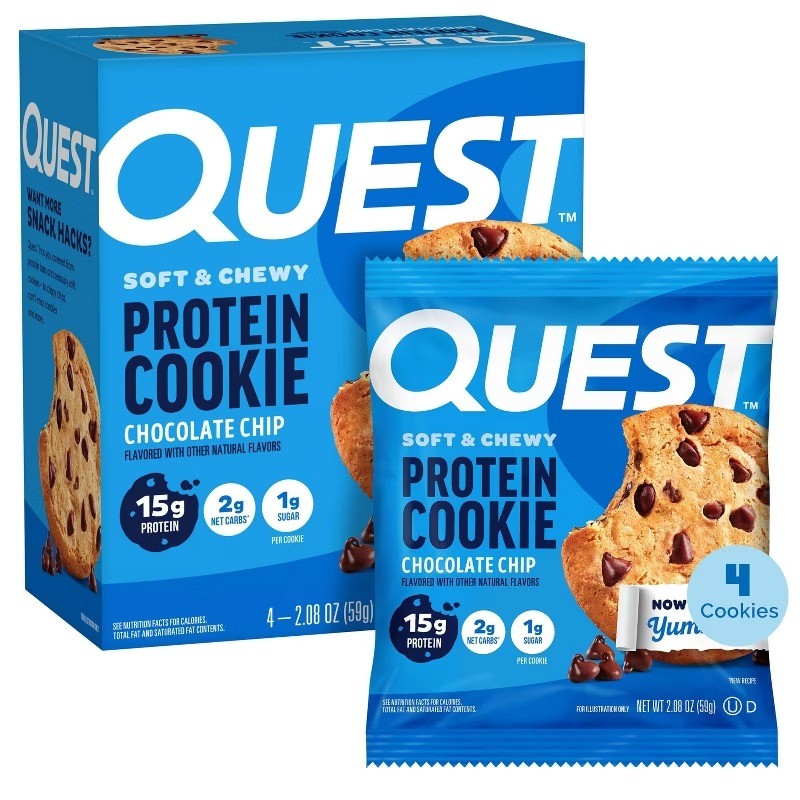

Photos from current listings. Actual item, color, and included accessories may vary.
Quest Nutrition Chocolate Chip Protein Cookie Buying Guide
Quest Nutrition Chocolate Chip Protein Cookie is a soft-baked, high-protein snack cookie engineered to deliver 15–16 g of protein per 2–2.5 oz cookie from a milk protein isolate and whey blend, with 8–10 g net carbs and 1–2 g sugar. The core trade-off is protein density versus texture: higher protein loads demand more humectants and fiber syrups, so cookies that hit 20 g protein often turn chalky or dry, while lower-protein versions taste closer to a conventional cookie but deliver less satiety. The decision rule: buy the standard 15–16 g protein formula with milk protein isolate first on the label for a genuinely soft cookie; skip any variant listing collagen or soy protein isolate as the primary source if you want complete amino acid profile and better texture.


At a glance
- Brand
- Not synced yet
- Model
- Not synced yet
- MPN
- Not synced yet
- Category
- Snacks, Tea & Coffee
- Status
- Offers available
- Data updated
- Nov 18, 2026
Current offers
Highlights
- Protein source hierarchy: milk protein isolate + whey protein isolate deliver complete EAA/BCAA profiles and softer crumb than collagen peptides or soy isolate, which bake drier and score lower on PDCAAS.
- Macro tiers matter: standard Quest cookie is 15–16 g protein, 8–10 g net carbs, 1–2 g sugar per cookie; higher-protein 'max' versions push 20 g+ but typically add sugar alcohols and fiber syrup that increase GI discomfort.
- Soft-baked format uses glycerin and soluble corn fiber for moisture retention — cookies stay chewy for months but firm up when refrigerated, so storage temperature directly changes texture.
- Allergen profile: contains milk and soy; manufactured on shared equipment with tree nuts, peanuts, and wheat — a hard disqualifier for severe nut allergies despite being gluten-free.
Best use cases
- Best fit: grab-and-go post-workout or afternoon snack where you need 15–16 g protein without a shaker bottle — pick the standard Chocolate Chip cookie in multi-packs and keep one in a gym bag or desk drawer.
- Best fit: gluten-free travelers and office workers replacing a candy bar — the cookie is certified gluten-free and shelf-stable for months, so it survives car gloveboxes and carry-on bags.
- Wrong fit: strict keto or carnivore dieters — 8–10 g net carbs and soluble corn fiber mean it is not a keto food; choose a lower-carb protein bar with 2–4 g net carbs instead.
- Wrong fit: severe tree-nut or peanut allergy households — shared-equipment allergen warning means cross-contact risk; pick a dedicated nut-free facility brand instead.
Buying tips
- Read the first protein ingredient: 'milk protein isolate' or 'whey protein isolate' means complete protein and softer texture; 'collagen' or 'soy protein isolate' first signals incomplete protein and drier bake.
- Compare net carbs, not total carbs: subtract fiber and sugar alcohols from total carbohydrates — Quest lands at 8–10 g net; anything above 12 g net behaves more like a dessert than a macro snack.
- Check cookie weight: standard Quest cookie is roughly 2–2.5 oz (59–70 g); single-serve 1 oz 'mini' versions have proportionally lower protein (around 8 g) — do not assume the same macros per piece.
- Buy multi-packs (4-count boxes) for cost-per-cookie efficiency and fresher rotation; single cookies from open retail displays are more likely to be near best-by and dried out.
Specs
| Protein Per Cookie | 15–16 g (milk + whey isolate) |
|---|---|
| Net Carbs / Sugar | 8–10 g net / 1–2 g sugar |
| Cookie Format | Soft-baked, 2–2.5 oz each |
| Allergen Profile | Milk, soy; shared nut/wheat equipment |
Alternatives to compare

Related searches
What to check before buying
- Confirm your daily protein target: one cookie covers roughly 20–30% of a 50–80 g goal, so plan 2–3 whole-food protein sources alongside it rather than relying on cookies alone.
- Verify storage: keep below 75°F (24°C) and away from direct sun — heat melts the chocolate chips and accelerates texture staling; refrigeration firms the cookie but extends shelf life.
- Check allergen labeling on the actual box: milk and soy are declared, and shared-equipment warnings for tree nuts, peanuts, and wheat mean nut-allergic buyers must choose a different brand.
- Match format to use: whole cookies for meal replacement snacks, mini or broken pieces for portion control — do not buy a 4-count box if you only need occasional single servings.
FAQ
Data sources: eBay / Amazon listings and product attribute feeds Data updated Nov 18, 2026.
Some links on this page are affiliate links. If you buy after clicking one, we may earn a commission at no extra cost to you. This does not change which products appear here or their order. Affiliate disclosure.