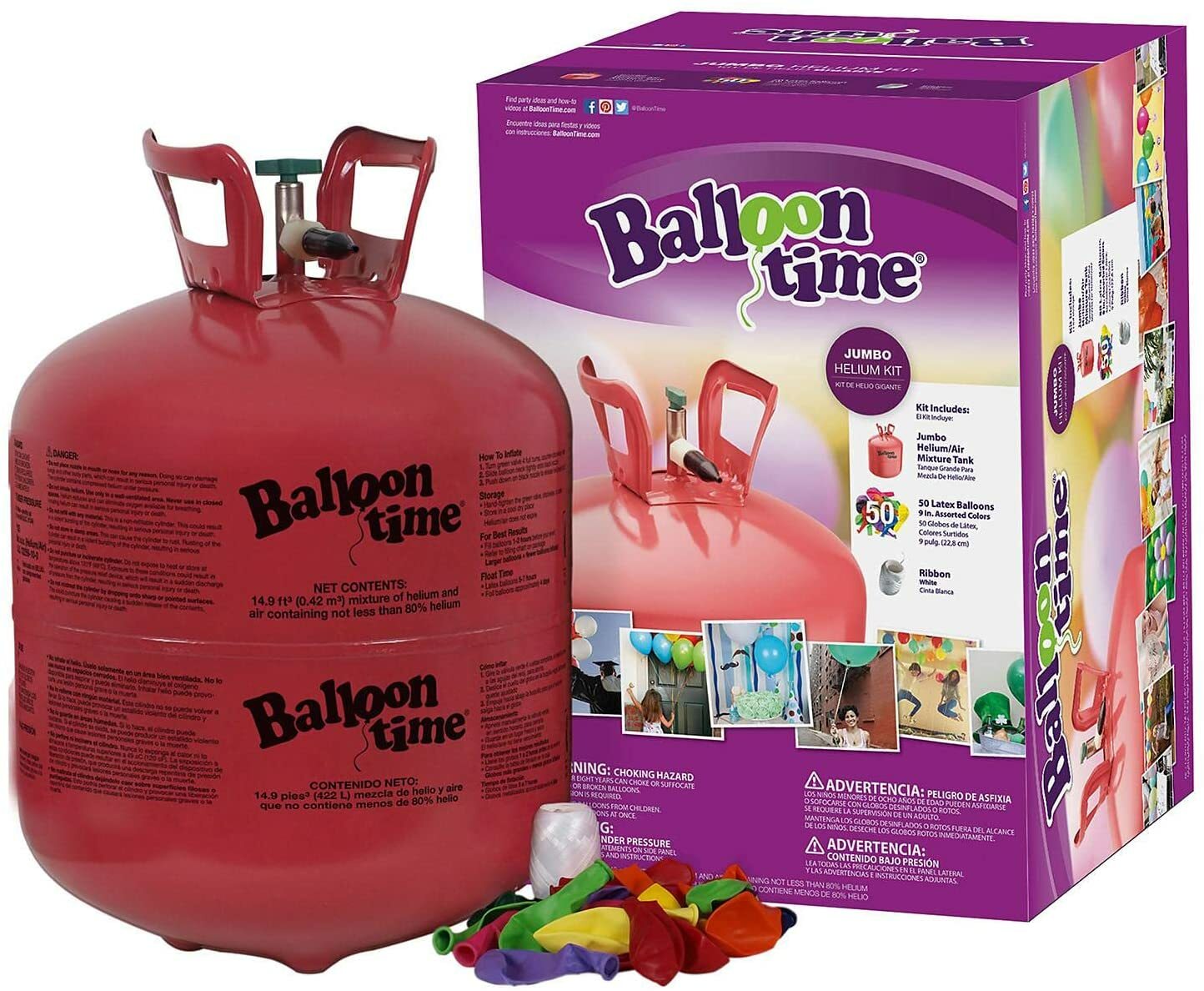

Photos from current listings. Actual item, color, and included accessories may vary.
Helium Tank Buying Guide
A helium tank for parties is a single-use or refillable compressed-gas cylinder sized by how many 9-inch latex balloons it inflates, not by gallon or liter marketing. The core trade-off is disposable steel cylinders with a fixed regulator versus refillable cylinders needing a CGA-580 valve and commercial fill, and the decision rule is simple: match the stated 9-inch balloon count to your event and skip any tank without a pressure regulator or clear balloon-yield rating.


At a glance
- Category
- Party Supplies & Balloons
- Data updated
- Nov 18, 2026
Current offers
Highlights
- Disposable tanks are rated in 9-inch latex balloons (commonly 30, 50, or 100) and cannot be refilled; larger 13L/22L cylinders typically inflate up to 50 and 100 balloons respectively.
- Refillable tanks use a CGA-580 brass valve and must be hydrostatically tested every 5 years; disposable party tanks use a built-in regulator and are recycled after one use.
- Helium lift is about 14 grams per cubic foot, so a 9-inch latex balloon needs roughly 0.5 cubic feet and a 12-inch foil balloon roughly 0.5-0.7 cubic feet of gas.
- Cylinder pressure reads 1,800-2,200 psi when full; output pressure is stepped down by the regulator, and a tank without a regulator cannot fill balloons safely or evenly.
Best use cases
- Choose a 50-balloon disposable tank with regulator for a single birthday party of 30-50 latex balloons; skip refillable cylinders if you have no local helium fill station.
- Choose a 13L or 22L refillable cylinder when you host events monthly and have a welding-supply store that fills CGA-580 tanks; skip disposable kits that cost more per balloon over repeated use.
- Choose a 100-balloon tank for balloon arches or garlands; skip small 30-balloon tanks, which run out mid-arch and force a second trip.
- Do not use party helium tanks for medical CPAP or scuba breathing gas; those require certified medical or breathing-air grades and different regulators.
Buying tips
- Size by balloon count: plan 1 cubic foot of helium per 2 nine-inch latex balloons, so a 50-balloon tank holds about 25 cubic feet and a 100-balloon tank about 50 cubic feet.
- Foil balloons need 0.5-0.7 cubic feet each and stay afloat 1-2 weeks; latex balloons need 0.5 cubic feet and float 8-12 hours, so buy extra gas if mixing types.
- For refillable tanks confirm a CGA-580 valve and a current hydro test date within 5 years; expired cylinders are refused by fill stations.
- Disposable kits include a regulator and nozzle; refillable setups need a separate balloon-filling regulator, so budget for that companion part.
Specs
| Tank Type | Disposable vs refillable CGA-580 |
|---|---|
| Balloon Yield | 30 / 50 / 100 (9-inch latex) |
| Cylinder Volume | 8.9L / 13L / 22L |
| Valve & Regulator | Built-in regulator vs CGA-580 |
Related searches
What to check before buying
- Count balloons first: total latex plus foil balloons, then divide latex by 2 for cubic feet and add 0.6 cubic feet per foil balloon.
- Confirm ceiling height and room volume; helium balloons rise, so vaulted ceilings need longer ribbons and more gas per balloon.
- For refillable cylinders verify a local supplier fills CGA-580 helium and check the cylinder hydro test date is within 5 years.
- Measure doorway and storage space: a 22L refillable cylinder stands roughly 2-3 feet tall and must be stored upright, away from heat.
FAQ
Data sources: eBay / Amazon listings and product attribute feeds Data updated Nov 18, 2026.
Some links on this page are affiliate links. If you buy after clicking one, we may earn a commission at no extra cost to you. This does not change which products appear here or their order. Affiliate disclosure.