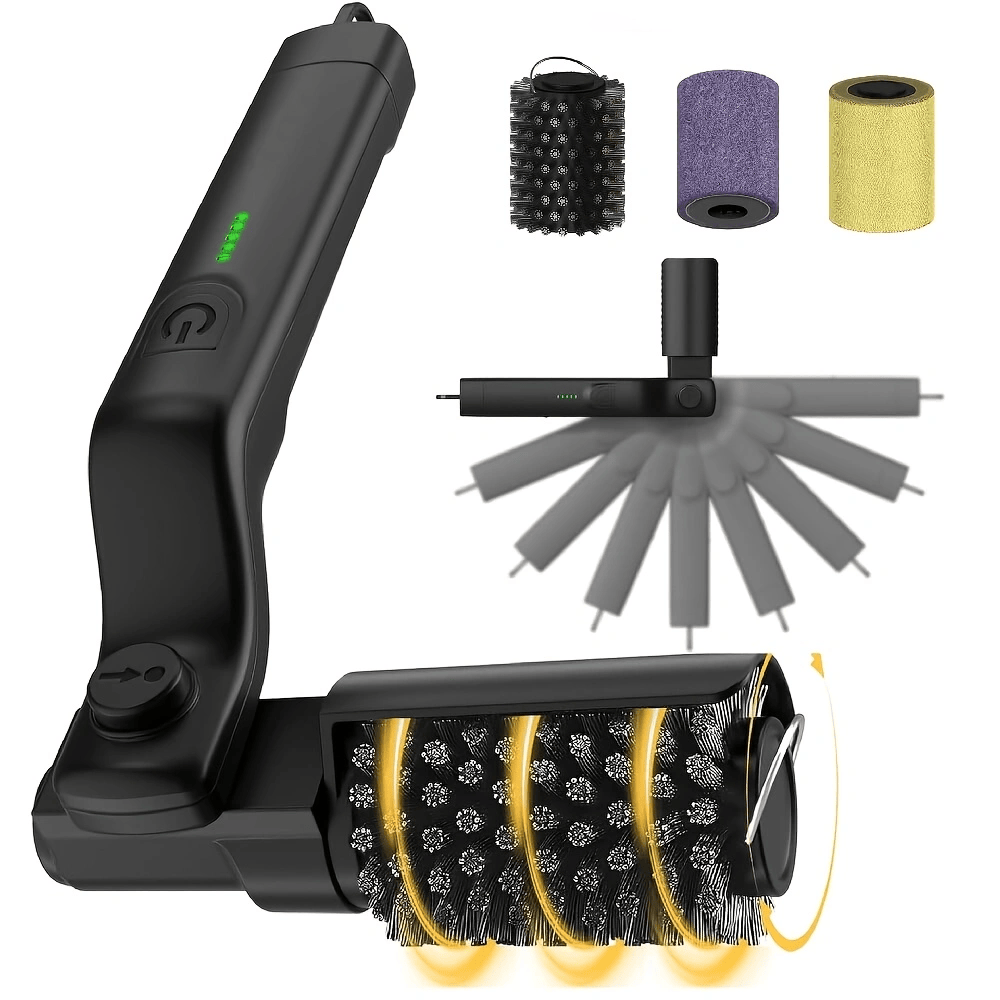

Photos from current listings. Actual item, color, and included accessories may vary.
Heavy Duty Grill Cleaner Buying Guide
Heavy-duty grill cleaners split into two architectures: powered rotary scrubbers that spin a stainless or nylon head to cut baked-on carbon, and manual high-stiffness brushes used with heat or chemical degreasers. The core trade-off is torque and runtime versus heat tolerance and simplicity—powered units win on cold, heavy carbon, while manual stainless brushes survive direct flame and cost far less. Buy powered only if you clean cold grates weekly; stay manual if you clean hot or clean infrequently.


At a glance
- Category
- Household Cleaning & Paper Supplies
- Data updated
- Nov 18, 2026
Current offers
Highlights
- Rotary scrubbers use a geared DC motor driving a 304 stainless or nylon bristle head; torque at the head—not raw RPM—determines whether it stalls on carbon.
- 304 stainless bristles resist rust and heat but are stiff enough to scratch porcelain-coated grates; nylon heads are safe on enamel but soften above roughly 200°F.
- Runtime tiers track battery capacity: compact units run 30–45 minutes, full-size models with 2.0–3.0 Ah packs reach 60–90 minutes of continuous scrubbing.
- Manual heavy-duty brushes rely on brass, stainless, or carbon-steel bristle stiffness plus a scraper edge; brass is softer and preferred on cast iron, stainless on cold carbon.
Best use cases
- Best fit powered rotary: cold grates with thick baked-on carbon on a gas or pellet grill—pick a 3-speed, stainless-head unit with at least 60 minutes runtime and a sealed motor housing.
- Best fit manual stainless/brass brush: hot-grate cleaning right after cooking or a charcoal kettle—skip powered units because heat and ash kill motor bearings.
- Best fit nylon-head rotary: porcelain-enameled or ceramic-coated grates where scratching is the main risk—skip stainless bristles entirely on coated surfaces.
- Wrong fit for any powered scrubber: daily commercial-volume cleaning or grills cleaned while still at full flame—use a scraper and chemical degreaser instead.
Buying tips
- Match head material to grate: stainless bristles for bare cast iron and steel, brass for cast iron to avoid scratching, nylon only for porcelain/enamel at low temperature.
- Require a sealed, water-resistant motor housing and removable head—grease and rinse water destroy unsealed motors, and replaceable heads extend life beyond a fixed brush.
- For cordless rotary units, choose a pack of 2.0 Ah or higher and a charger standard you already own; sub-1.5 Ah packs drop below 30 minutes under load.
- Manual brushes should have a scraper blade and bristle rows at least 1 inch deep; shallow bristle beds bend and stop reaching carbon in grate valleys.
Specs
| Power Type | Cordless rotary / corded / manual |
|---|---|
| Head Material | 304 stainless / brass / nylon |
| Runtime Tier | 30–45 min compact / 60–90 min full |
| Grate Compatibility | Bare iron & steel / enamel-safe |
Related searches
What to check before buying
- Measure grate bar spacing and depth: rotary heads need 4–6 inch clearance and bristles long enough to enter valleys without the motor housing dragging.
- Confirm grate material and coating—bare cast iron, stainless, or porcelain enamel—because coating dictates nylon vs stainless vs brass bristles.
- Check the cleaning environment: outdoor use needs water-resistant housing and a rinse-safe head; indoor countertop cleaning favors compact corded or manual brushes.
- Verify battery/charger compatibility if buying cordless, and confirm replacement heads or brush refills exist for the model before committing.
FAQ
Data sources: eBay / Amazon listings and product attribute feeds Data updated Nov 18, 2026.
Some links on this page are affiliate links. If you buy after clicking one, we may earn a commission at no extra cost to you. This does not change which products appear here or their order. Affiliate disclosure.