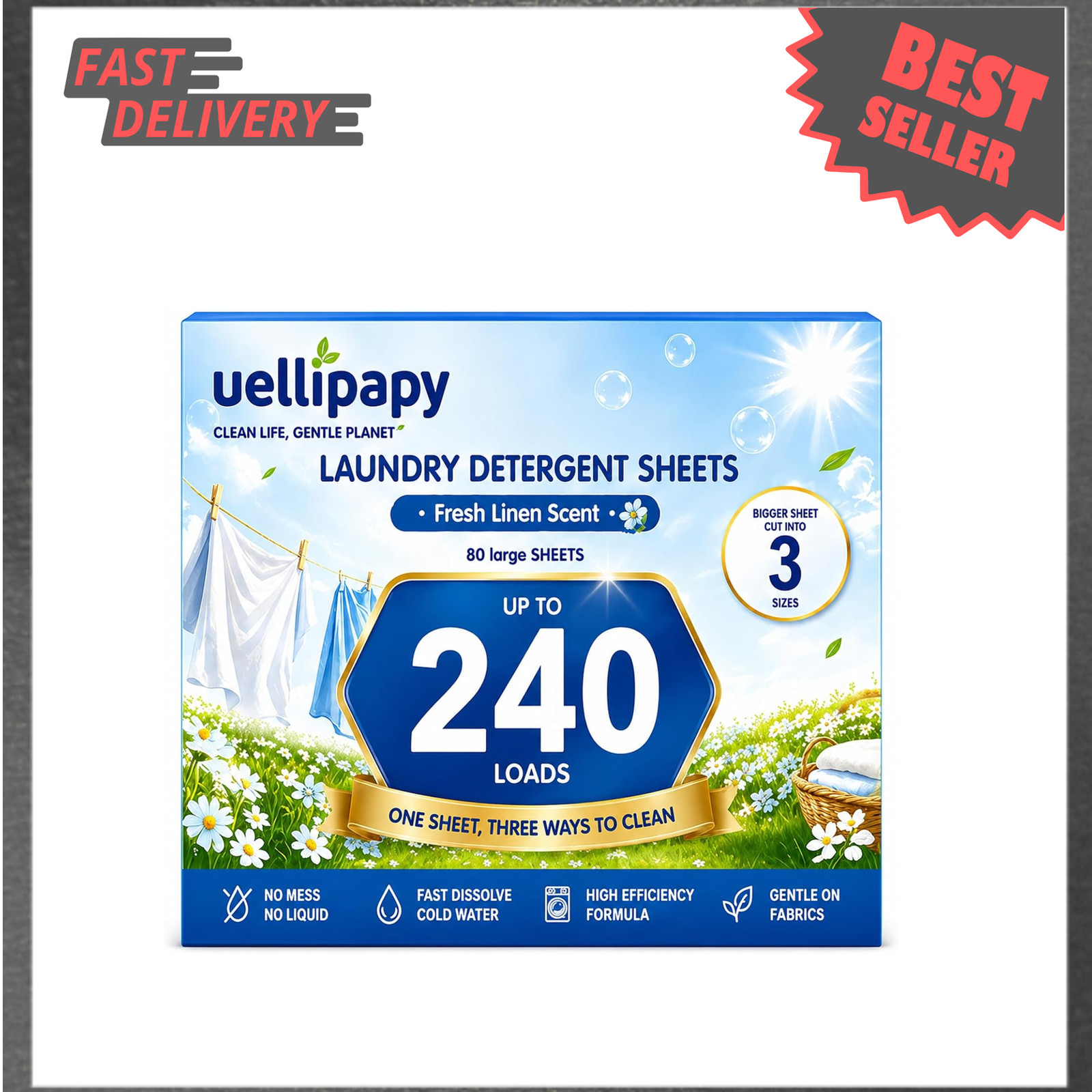

Photos from current listings. Actual item, color, and included accessories may vary.
Enzyme Laundry Detergent Buying Guide
Enzyme laundry detergents use protease, amylase, lipase, and cellulase to break down protein, starch, fat, and cellulose stains at low wash temperatures. The primary trade-off is enzyme load and stability: liquid formats preserve multi-enzyme activity but add water weight, while sheets trade potency for zero-mess dosing and plastic-free shipping. Choose a liquid concentrate with declared enzyme classes for heavy soil, or a sheet format only for light-to-moderate loads and travel.


At a glance
- Category
- Household Cleaning & Paper Supplies
- Data updated
- Nov 18, 2026
Current offers
Highlights
- Protease and amylase are the baseline enzyme classes; lipase and cellulase are premium additions that separately target grease and fabric pilling.
- Liquid detergents preserve enzyme activity in water-glycerin systems; sheet detergents immobilize enzymes in a PVA film that dissolves above roughly 40°F.
- Enzyme performance peaks at 60-100°F wash temperatures; hot washes above 140°F denature proteins and waste the enzyme premium.
- Sheet formats typically dose 1 sheet per regular load and 2 for heavy soil; liquid concentrates dose 1.5-2 oz per standard load.
Best use cases
- Choose a multi-enzyme liquid concentrate if you wash daily family laundry with food, grass, and body-oil stains at 60-86°F; skip sheets for this load profile.
- Choose enzyme sheets if you live in an apartment with a shared or compact washer, want pre-measured zero-spill dosing, and launder light soil at 60-77°F.
- Skip enzyme detergent entirely for sanitizing cloth diapers or pet bedding at 140°F+; the heat kills enzyme activity, so use an oxygen bleach or sanitizer cycle instead.
- Pick a hypoallergenic enzyme sheet with no added fragrance for sensitive skin; standard liquid enzyme detergents often carry dye and perfume loads that sheets avoid.
Buying tips
- Match dose to washer drum: front-load high-efficiency machines need 1-2 tbsp liquid concentrate; top-loaders with agitators need 2-3 tbsp for the same soil level.
- Verify the label lists at least two enzyme classes (protease plus amylase); single-enzyme products underperform on mixed everyday stains.
- For sheet detergents, confirm the film is PVA-based and dissolves in cold water; starch-based films leave residue on dark fabrics.
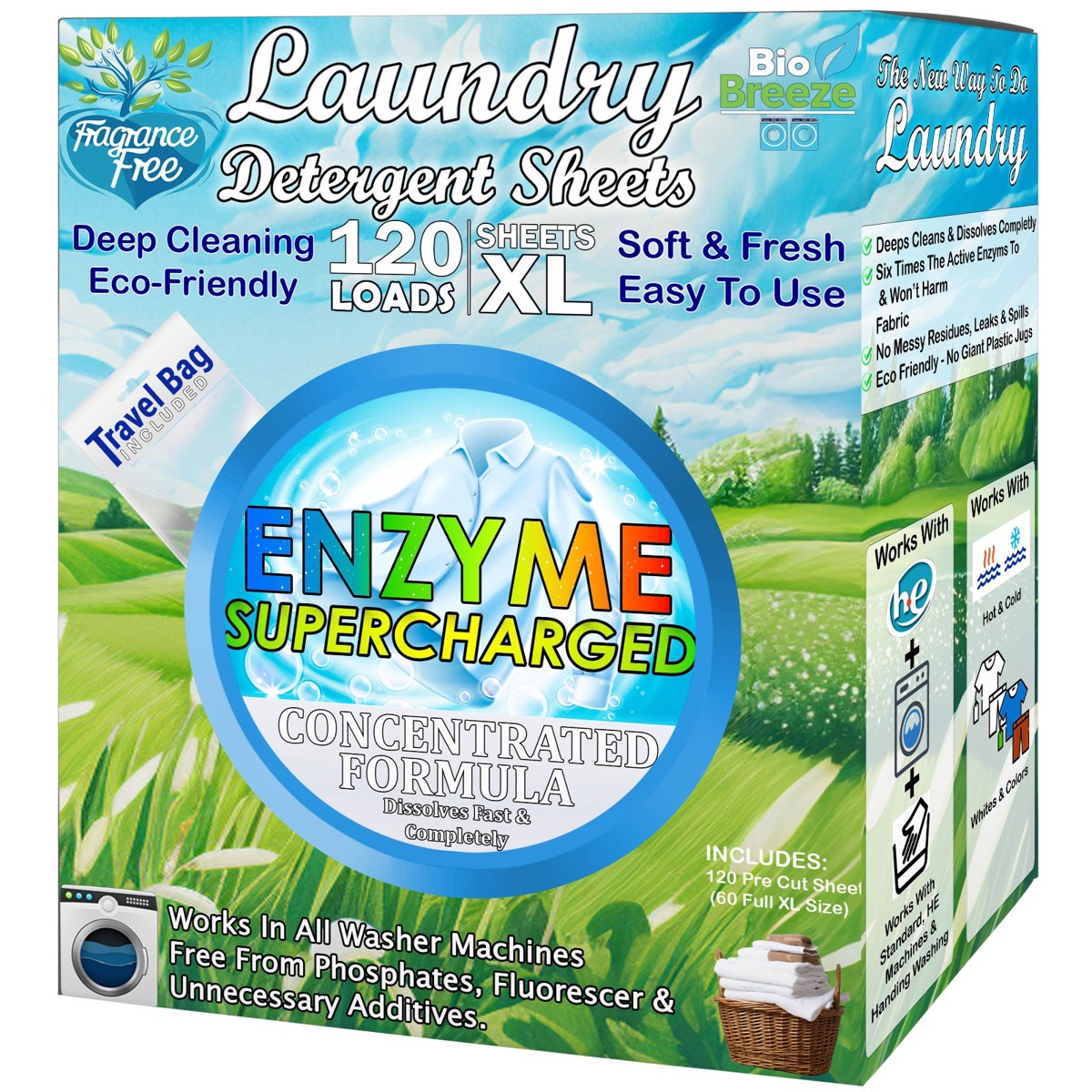
- Calculate cost per load, not per package: a 120-load sheet pack equals roughly 60 heavy-soil washes, so compare against liquid concentrate at 1.5 oz per load.
Specs
| Enzyme Classes | Protease + Amylase (baseline); + Lipase/Cellulase |
|---|---|
| Format | Liquid concentrate / Sheet / Pod |
| Wash Temp Range | 60-100°F active; >140°F denatures |
| HE Compatibility | Low-suds required for front-load |
Related searches
What to check before buying
- Measure your washer drum capacity: compact 1.5-2.2 cu ft machines need half the standard dose; 4.5+ cu ft top-loaders need the full label dose.
- Confirm your wash temperature habit: enzyme detergents work at 60-100°F; if you routinely wash hot, enzymes are wasted spend.
- Check for septic systems and greywater reuse: enzyme detergents are septic-safe, but sheet PVA film requires a municipality that accepts PVA in wastewater.
- Verify HE compatibility for front-loaders: low-sudsing enzyme formulas are required; standard-suds liquid in an HE machine causes oversudsing and rinse failures.
FAQ
Data sources: eBay / Amazon listings and product attribute feeds Data updated Nov 18, 2026.
Some links on this page are affiliate links. If you buy after clicking one, we may earn a commission at no extra cost to you. This does not change which products appear here or their order. Affiliate disclosure.