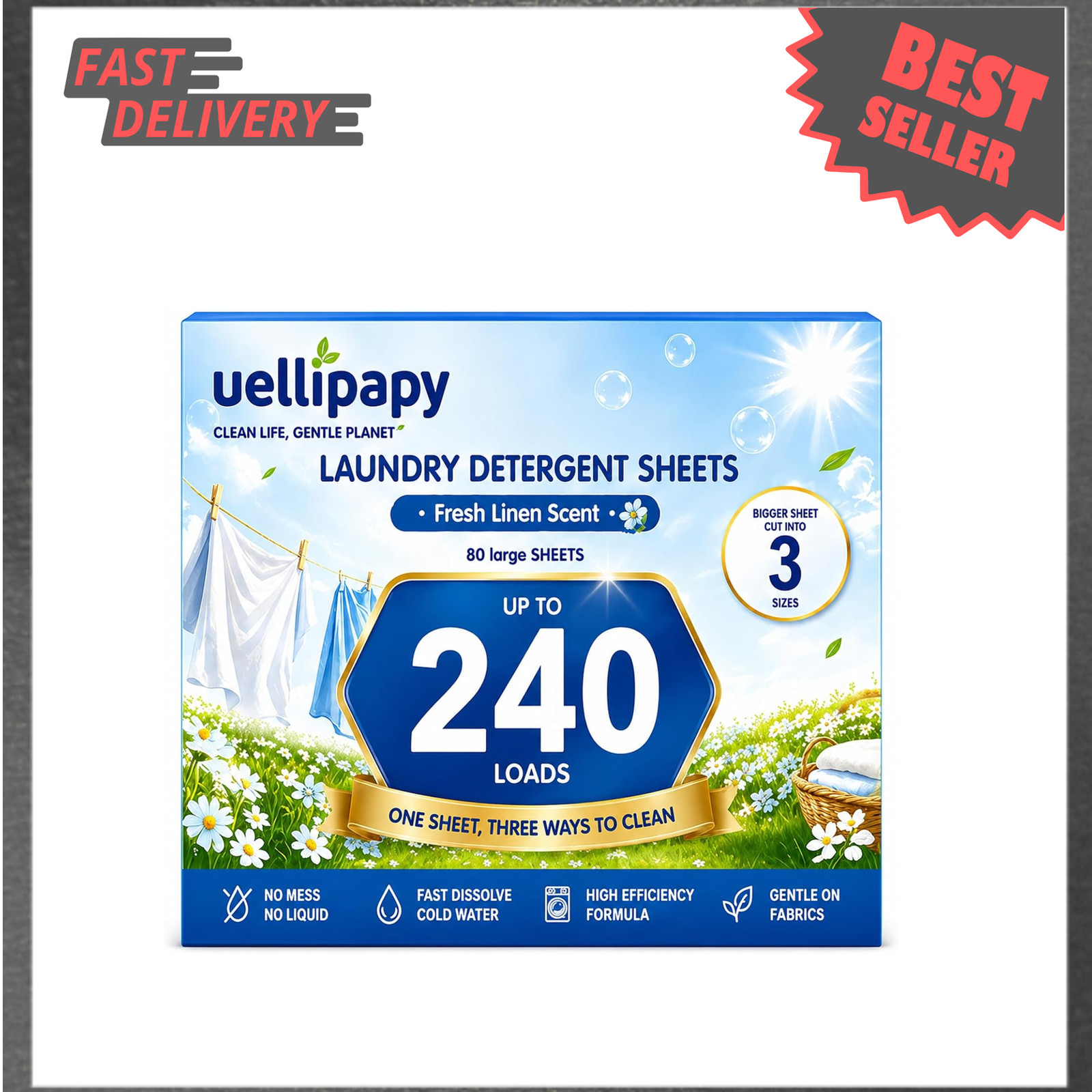

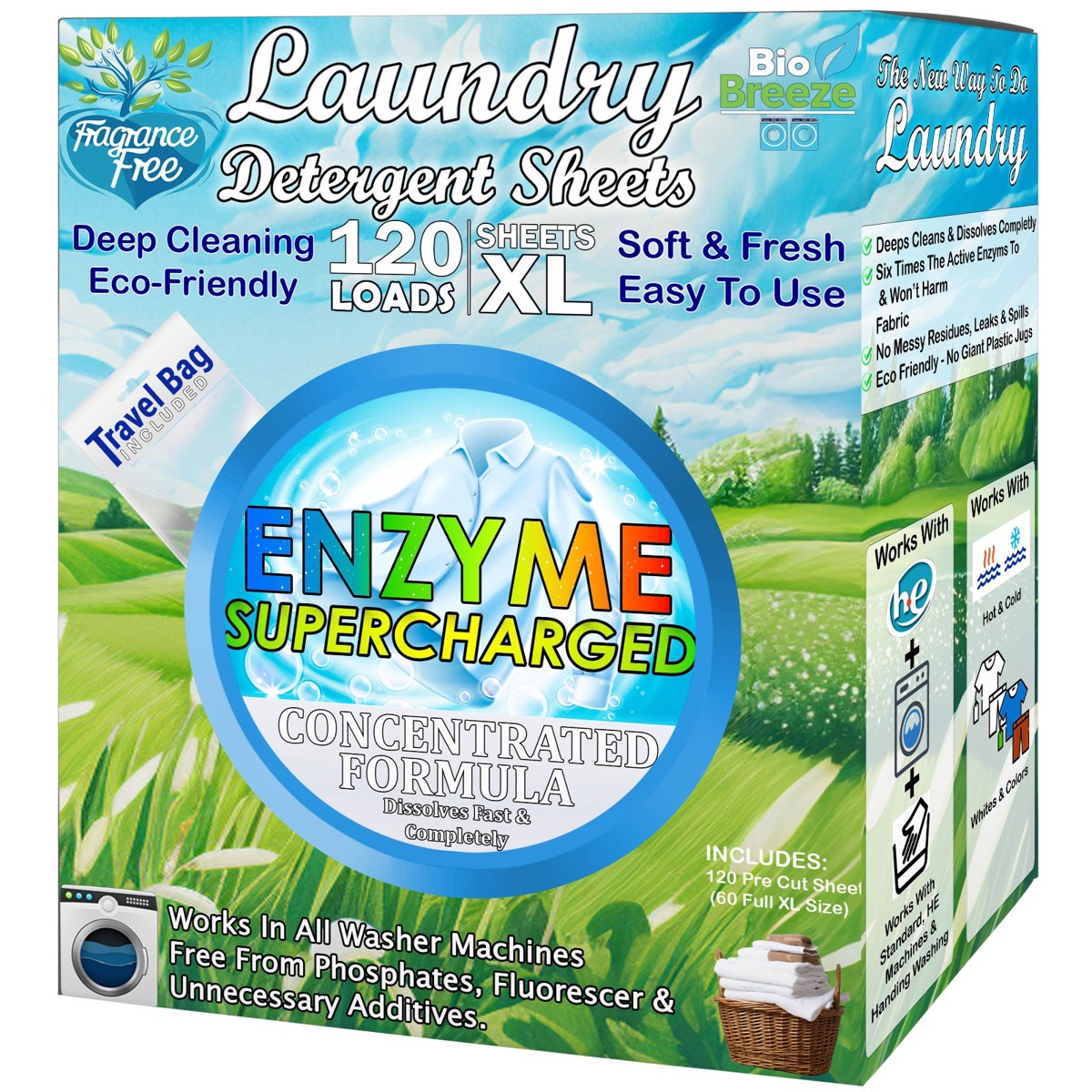
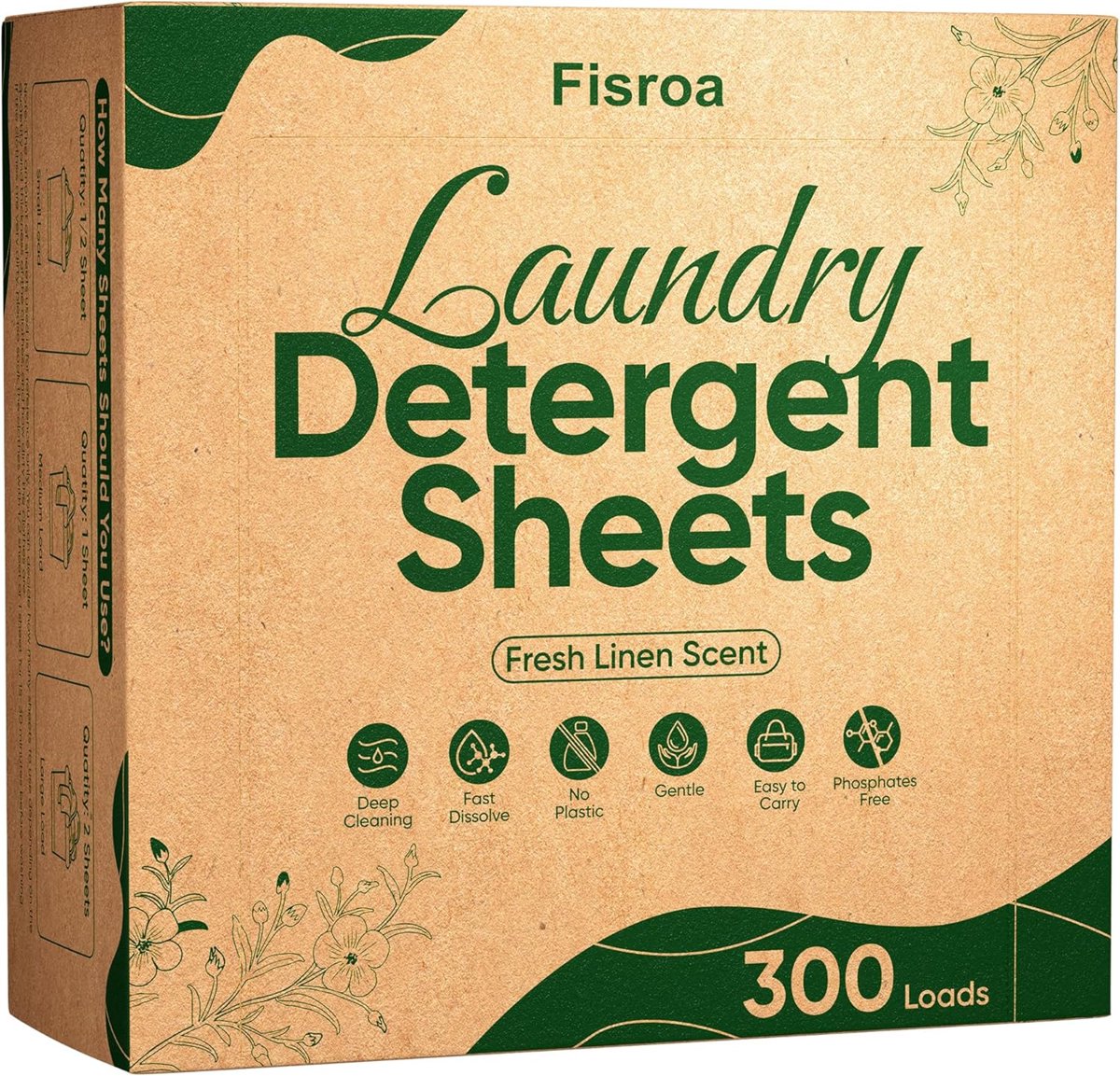
Photos from current listings. Actual item, color, and included accessories may vary.
Eco Friendly Laundry Detergent Buying Guide
Eco-friendly laundry detergents replace petrochemical surfactants and single-use plastic jugs with concentrated sheets, plant-based liquid pods, or refillable concentrates. The core trade-off is stain-fighting power versus ingredient transparency and packaging waste: enzymatic sheet formats trade heavy-duty grease removal for zero-plastic dosing and travel portability. Choose sheets for light-to-normal soil and portability, and choose plant-based liquid or powder concentrates when you need maximum stain capacity per load.


At a glance
- Category
- Household Cleaning & Paper Supplies
- Data updated
- Nov 18, 2026
Current offers
Highlights
- Sheet detergents are pre-measured surfactant films: one sheet equals one standard load, and half-sheets handle small or lightly soiled loads without guessing dose volume.
- Enzyme blends (protease, amylase, lipase) determine stain performance; protease attacks protein stains, amylase starches, and lipase fats, so a multi-enzyme sheet outperforms soap-only formulas.
- Load counts scale inversely with sheet size: 240-load packs use smaller sheets than 120-load packs, so compare cost-per-load and sheet dimensions rather than headline load counts.
- Plastic-free credentials require more than the word eco: look for readily biodegradable surfactant bases, phosphate-free and optical-brightener-free formulas, and FSC-certified or plastic-free outer packaging.
Best use cases
- Best fit for renters, travelers, and dorm users: 120- to 300-load sheet packs store flat, pass TSA carry-on rules, and eliminate liquid leaks and jug plastic.
- Best fit for cold-water and high-efficiency (HE) front loaders: sheet and plant-based liquid formulas dissolve fully in cold cycles and are low-sudsing for HE drums.
- Wrong fit for heavy grease, motor oil, or set-in stains: choose a plant-based liquid concentrate with an enzyme booster instead of a sheet, which lacks the surfactant load for tough soil.
- Wrong fit for households with sensitive skin unless fragrance-free: many eco sheets still carry perfume; pick fragrance-free, dye-free, hypoallergenic versions for eczema-prone skin.
Buying tips
- Match dose to drum size: use one full sheet for 8-12 lb loads and half a sheet for loads under 8 lb; oversized doses leave residue on dark fabrics.
- Check sheet dimensions, not just load count: larger 4x4-inch sheets suit full HE loads, while 3x3-inch sheets are better for compact washers and hand washing.
- Prioritize multi-enzyme formulas listing protease, amylase, and lipase on the label; single-enzyme or soap-only sheets underperform on mixed stains.
- Choose fragrance-free and dye-free versions for baby clothes, activewear, and sensitive skin; fragrance oils can cling to synthetic fibers and trigger irritation.
Specs
| Format | Sheets vs liquid pods vs powder |
|---|---|
| Load Count | 60-300 loads per pack |
| Enzyme Blend | Protease + amylase + lipase |
| Plastic-Free Packaging | FSC paper / compostable sleeve |
Related searches
What to check before buying
- Confirm your washer type: HE front loaders need low-sudsing formulas, and sheets are inherently low-sudsing and safe for HE machines.
- Measure your typical load weight: a full sheet suits 8-12 lb loads, so weigh a laundry basket once to calibrate half-sheet dosing.
- Check water temperature: sheets dissolve best at 60°F and above; for cold washes under 60°F, pre-dissolve the sheet in a cup of warm water.
- Verify skin sensitivities: if anyone in the household has eczema or fragrance allergy, select a hypoallergenic, fragrance-free, dye-free sheet.
FAQ
Data sources: eBay / Amazon listings and product attribute feeds Data updated Nov 18, 2026.
Some links on this page are affiliate links. If you buy after clicking one, we may earn a commission at no extra cost to you. This does not change which products appear here or their order. Affiliate disclosure.