Which Kitchen Tools Are Most Useful for Safe, Efficient Home Cooking?
A short guide to the core kitchen tools that support safer food handling, easier prep, and simpler storage, with references to public food-safety resources.
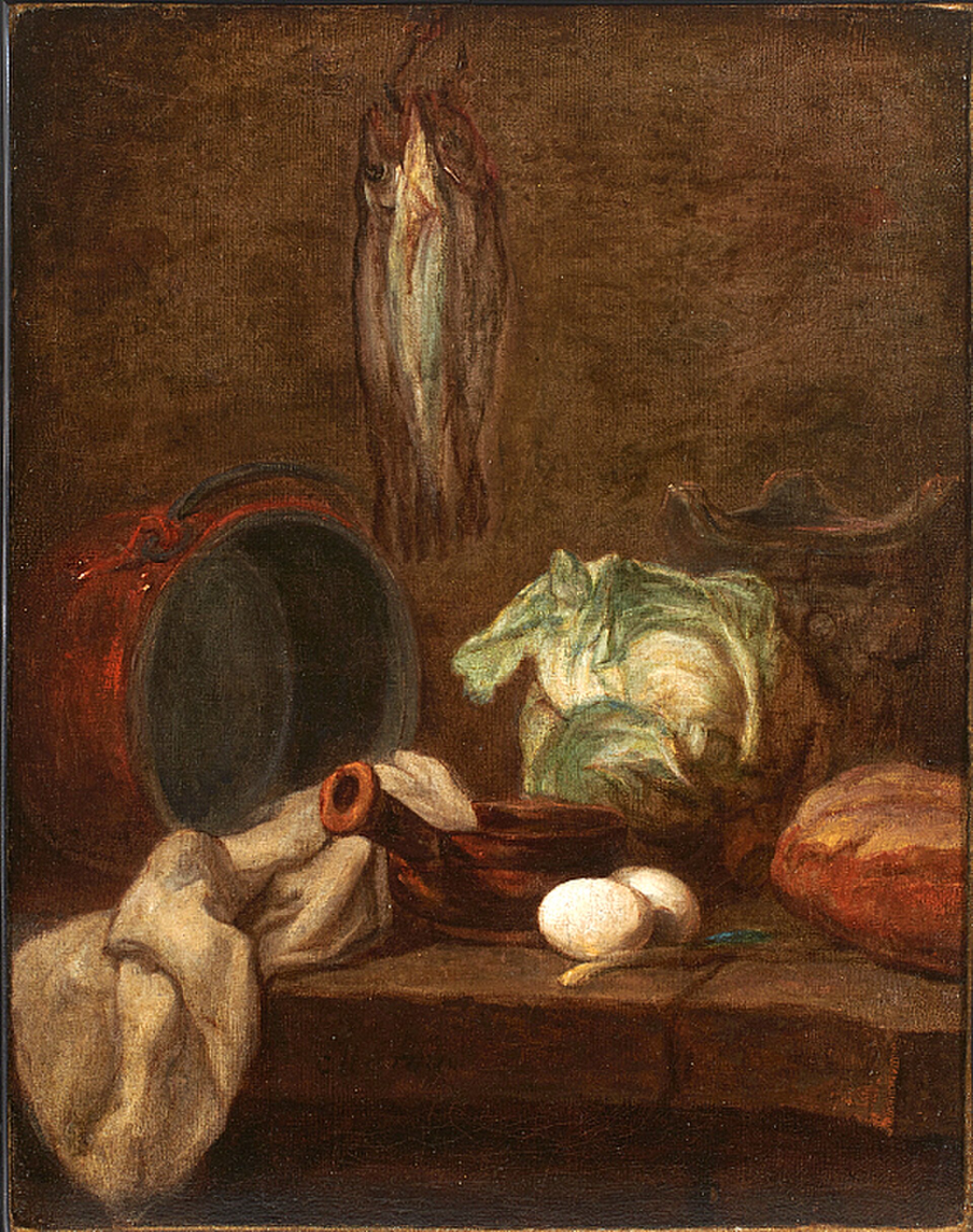
Cover: clarkart.edu · Wikimedia Commons · Public domain
Question: Which kitchen tools are most useful for safe, efficient home cooking?
What is the short answer?
A small core set covers most home-cooking needs: a food thermometer, at least one cutting board, a comfortable knife, basic measuring tools, and storage containers. Specialty tools can be useful, but they are optional rather than essential for safe, efficient cooking.
Which tools support food safety?
A food thermometer is a key example of a tool that supports verification rather than guesswork. Cutting boards matter because they provide a surface for separating raw and ready-to-eat foods or for cleaning between tasks. Public food-safety resources explain cross-contamination and temperature checks; exact guidance should be checked at the source.
Which tools make prep more efficient?
A comfortable knife, a stable cutting board, mixing bowls, and basic measuring tools reduce friction in everyday cooking. The goal is not a large collection but tools that are easy to clean, store, and use repeatedly. Choose sizes and materials that fit your space and cooking style.
How do storage and organization fit in?
Clear containers, labels, and a simple shelf layout can make ingredients easier to find and leftovers easier to track. Public guidance generally emphasizes keeping raw foods separated from ready-to-eat items and following storage recommendations. Organization is mainly about reducing clutter and making safe handling easier to repeat.
When should gear be cleaned, repaired, or replaced?
Public guidance generally emphasizes cleaning and drying tools after use and inspecting boards, knives, and containers for cracks, loose parts, or damage. If a tool is hard to clean or no longer fits its task, repairing or replacing it may make more sense than keeping it. Material-specific care questions are best checked against public food-safety and consumer resources.