Home Emergency Gear for Beginners: What to Know Before You Buy
A beginner-friendly explanation of how public preparedness checklists frame home emergency gear, with attention to purpose, common categories, storage, rotation, and household-specific needs.
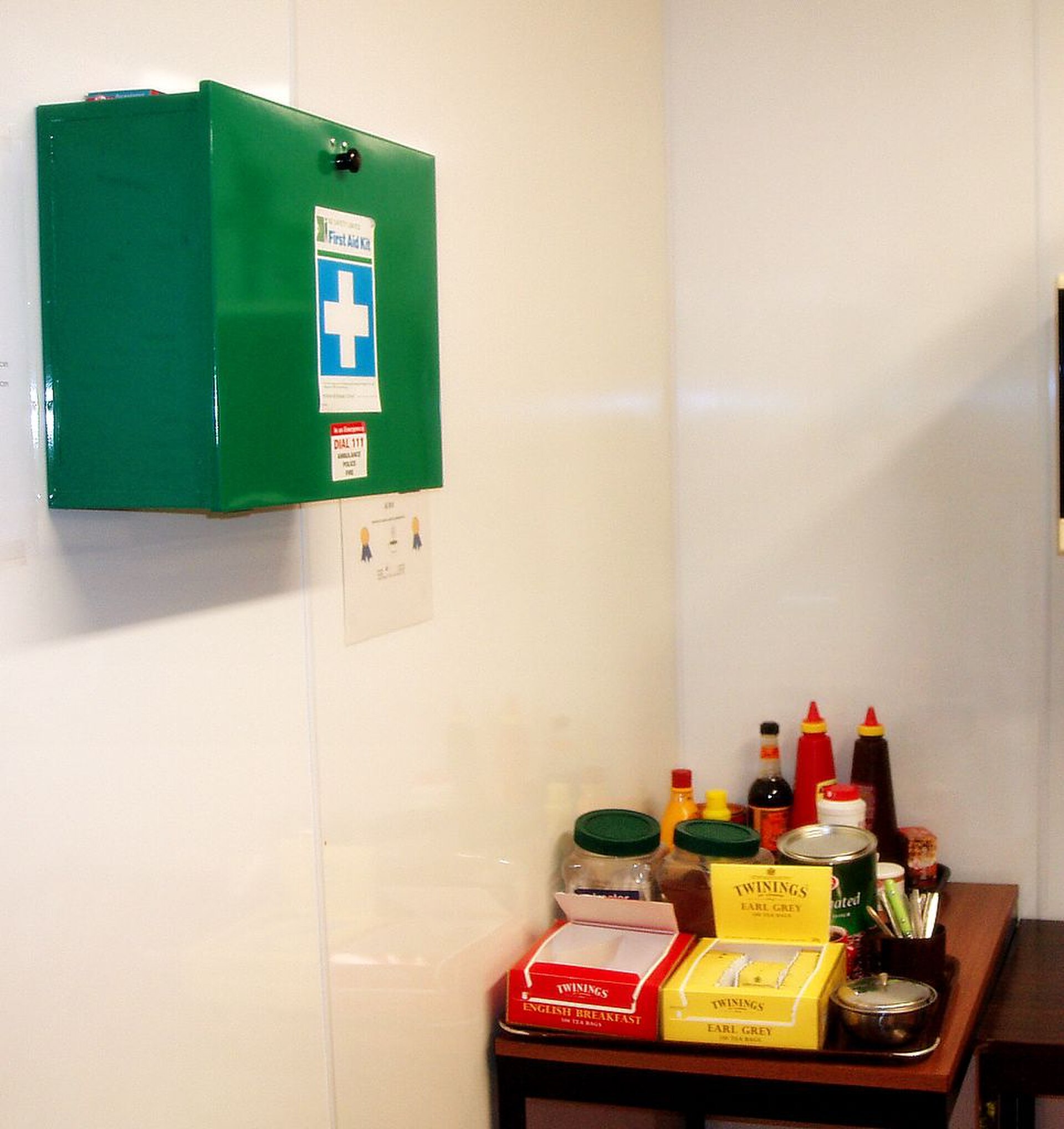
Cover: First Aid in the Tea Room · Wikimedia Commons · CC BY 2.0
Question: What should beginners understand about choosing and keeping home emergency gear?
Start with the purpose, not the products
Public preparedness guidance generally begins with the situations a household wants to prepare for, not with a single product or brand. Ready.gov and the American Red Cross organize emergency supplies around household needs such as local hazards, people in the home, pets, and access to communication and documents. For a beginner, the useful first step is to define the general purpose of the gear, such as supporting a short disruption at home, and then compare that purpose with public checklists. This keeps shopping focused on gaps rather than on duplicate items.
Common categories in public checklists
Public emergency supply lists commonly group gear into broad categories: water and food, first-aid and personal items, tools and power, communication and important documents, sanitation and comfort, and supplies for pets or specific household members. These categories are a practical way to compare kits and spot missing areas. They are also a reminder that home emergency gear is not one item but a small system of related supplies. Beginners can use the categories as a checklist without assuming that any single list fits every household.
Storage and rotation matter more than a single purchase
Gear is only useful if household members can find it and if the supplies are still in usable condition. Public preparedness resources often emphasize storing supplies in an accessible place and reviewing them periodically. A beginner-friendly approach is to choose a storage location that matches the home layout, keep related items together, and make a simple note of what needs review. A single large purchase is less important than knowing what is stored, where it is kept, and whether the contents still match the household’s needs.
Adapt the kit to the household
Household composition, mobility needs, pets, dietary preferences, and local climate can all affect what belongs in a home emergency kit. Public checklists sometimes include variations for children, older adults, and pets, which helps beginners see where a standard list may need adjustment. Comparing checklists and writing down gaps is more useful than buying duplicate gear. This kind of planning supports general preparedness but does not guarantee safety or replace local emergency guidance.
Use public resources as a baseline
Ready.gov and the American Red Cross offer free public checklists that can serve as a baseline for beginners. These resources are useful for understanding common categories and planning questions, while local emergency management guidance can help with area-specific hazards. A beginner does not need to assemble the largest possible kit or buy every item at once. Understanding the purpose, categories, storage, and upkeep of home emergency gear is a more durable starting point than focusing on a single purchase.